The Anduril empire just keeps on growing.
This morning, the defense tech giant announced in an exclusive release to Tectonic that it has acquired Sandwich, Massachusetts-based underwater acoustics company Popoto Modem to “accelerate Anduril’s efforts to develop, produce, and deploy a fleet of autonomous underwater systems.”
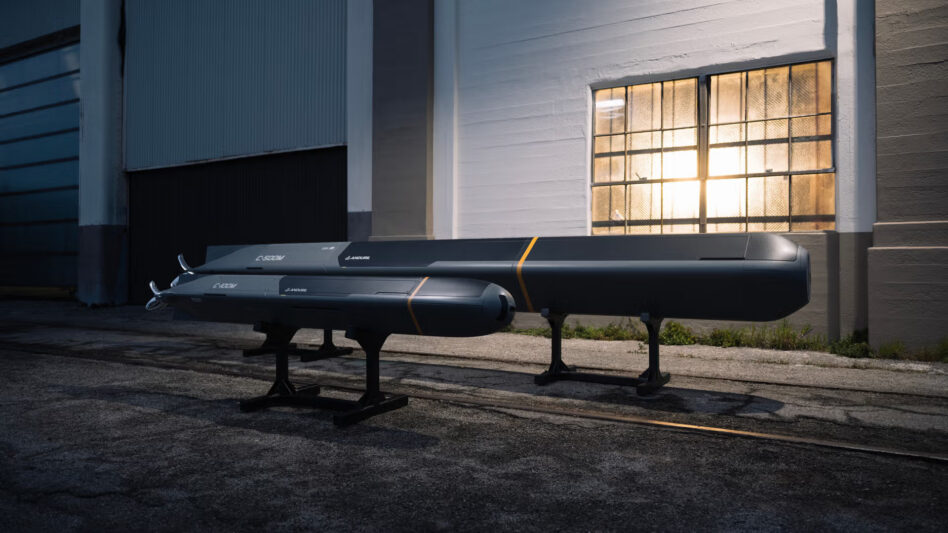
- And this ain’t a blind date—Anduril says the two companies have worked together “for several years” and have integrated the company’s acoustic modems into “a variety of products across Anduril’s family of maritime systems,” including their Copperhead UUV.
“As we worked with them more and more, we found that their system was really capable and really differentiated compared to other modems that we were working with,” Andrew Nuss, Anduril’s managing director for growth and strategy for maritime, told Tectonic. “[Plus, they] really match the ethos that we have with our maritime systems in that they’re highly capable, they’re affordable, and they’re highly producible.”
“More importantly, it really helps solve the wicked problem that we have with subsea, which is communications,” he added.
Anduril could not reveal the terms of the deal, but the company (including its customers and employees) will be fully folded into Anduril.
Come on in, the water’s fine: Now, you might not think of Anduril as a maritime company, but they’ve actually made some serious moves in the whole “things that swim and float” space.
- The company entered the maritime domain with its acquisition of Dive Technologies back in 2022, bringing their Dive LD autonomous sub into Anduril’s portfolio.
- Then, they scaled that way, way up to Dive XL, which is the basis of Ghost Shark (the big boy drone sub co-developed with Australia that is now on a $1.7B program of record). It’s also on contract to prototype Dive vehicles with the US Navy (one of which was captured by Iran while deployed in CENTCOM this summer).
- Last year, they also unveiled a family of super-fast UUVs called Copperhead (which can do both ISR and the go-boom stuff), and an underwater sensing network called Seabed Sentry.
Plus, they’re now in the surface vessel game. Anduril has teamed up with HD Hyundai to build ASVs—including for the US Navy’s MUSV effort—out of Seattle. Get you a company that can do it all.
Keep in touch: The issue is that all of these different platforms—especially the subsea ones—need to talk to each other. And that’s no easy feat.
“Unlike drones that operate in the air domain or on the ground, or even space systems, we don’t have the luxury of using RF communications. That just simply doesn’t work subsea,” Nuss said. “The only way to communicate with systems subsea is through acoustic communications, and it’s a challenging physics problem.”
Here’s the issue:
- Acoustic modems send information as sound waves through the water—essentially an underwater version of a radio link. But acoustic comms are slow and can be unreliable.
- They have far less bandwidth than radio, so you can’t easily stream video or constantly send huge amounts of sensor data.
- Plus, the ocean messes with the signal. Temperature, salinity, depth, waves, the seabed, and other noise can bend, reflect, distort, or drown out acoustic signals.
Make the connection: Popoto’s pitch is that you can’t really change all that—but you can change how a modem (the little device that converts data into signals that can be transmitted and received over a communications link) processes stuff.
- The company’s modem automatically adapts how it sends data based on underwater conditions, trading speed for reliability when the acoustic channel gets worse.
- It also deliberately sends redundant information. At lower data rates, it repeats/codes bits so that even if parts of the acoustic transmission get mangled, the receiver can reconstruct the message. That’s called forward error correction.
- It also compensates for movement. If an underwater vehicle is moving, Doppler shifts the sound frequency. Popoto measures that Doppler shift and processes the incoming signal accordingly so it can still decode it.
- It also automatically deals with echoes and multipath (when a signal reaches a receiver by multiple routes).
Basically, it’s coded in all the annoying stuff that happens when you’re trying to communicate underwater and compensates for it.
Just keep swimming: And it sounds like Anduril has liked what they’ve seen from Popoto so far.
“[The integration onto Copperhead] has allowed us to really explore and evaluate their technology,” Nuss said. “In that partnership and that work with them, we found them to be a really top-notch capability. [They’re a] small team really committed to their mission with a really strong capability in understanding the undersea domain.”
Now that they’re under the Anduril umbrella, the plan is to take that capability and scale it all the way up.
- Nuss said that Popoto will continue building and selling for its existing customers, just under Anduril.
- Anduril’s, well, empire also means that they’ll “be able to provide some of our high-rate production capacity and capabilities with that team and really help scale this capability,” Nuss said.
“Now we can bring Popoto and the capability that they have into a lot of these really challenging operational problems,” he said. “It’s really about bringing Anduril’s ability to mesh different nodes and different sensors and systems together. Now, we can do that subsea with this communications layer that Popoto provides.”
“There are a few different possible operational missions,” Nuss added. “For example, there’s a lot of conversation right now around port security and harbor defense, and having the ability to communicate to disparate sensors and systems in those kinds of challenging domains is certainly a pretty interesting operational use case.”