Aventra has had a busy, busy year.
Since coming out stealth with a $3.5M seed round last October, the Virginia-based startup has delivered hundreds of its high-altitude balloon-dropped glide bombs to US and NATO customers, doubled revenue (that’s production revenue, not RDT&E funding), and raised a nice chunk of new capital—$17.5M, to be exact, Aventra told Tectonic exclusively.
- Konvoy Ventures led the round, with seed round backer Lavrock Ventures participating alongside new investors Booz Allen Ventures, Sands Capital, Langford Industries, and Western Alliance Bank.
With the new funds—and the company more broadly—the goal is to make dumb bombs smart and long-range strikes cheap in a way that redefines “the economics of long-range precision strike,” Aventra co-founder and CEO Michael Weigand told Tectonic. “Physics really is reshaping economics, and stratospheric winds carrying mass downrange without fuel get you much more range at a fraction of the cost of standoff munitions.”
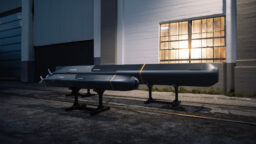
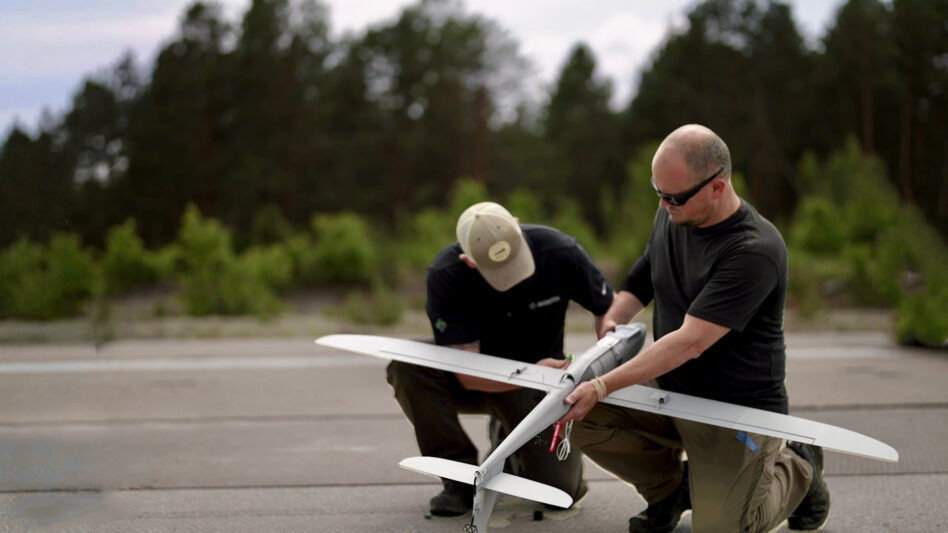
Flying fish: Piranha, Aventra’s flagship product, is basically a high-altitude, balloon-dropped glider that turns unguided munitions into smart bombs on a budget—kind of like what the JDAM did for 500-2000 lb bombs, but wayyy smaller.
- The company started out building an airframe and guidance kit that turned an 81mm mortar into a guided air-launched (or air-dropped) long-range strike vehicle.
- They’ve since “moved away from the mortar retrofit thesis because we found that the mortar really hadn’t been appreciably re-engineered since World War II,” Aventra Weigand said, and “new mortars have better desensitized energetics.”
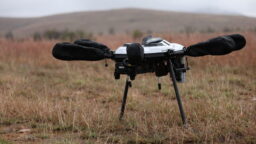
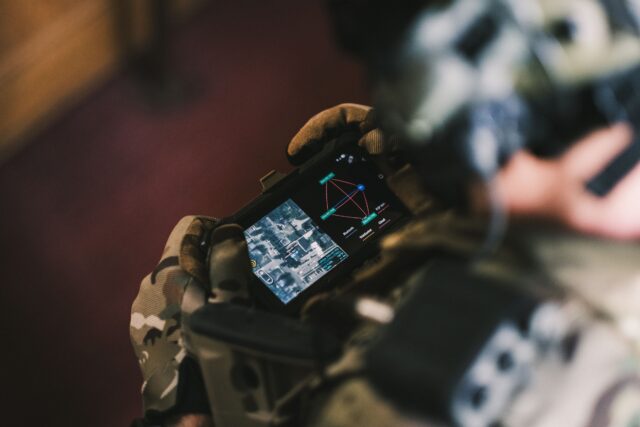
The latest iteration, he added, takes a munition custom-built for Piranha by an undisclosed partner that’s loaded into the airframe “like a shotgun shell,” floated up 60,000 feet into the stratosphere, and dropped, using gravity and their fully autonomous guidance kit to guide the bomb to a predetermined target (keeping a human in the loop with an in-house comms relay system to change or abort the strike, if needed).
“For the same amount of mass, but with a highly engineered mortar, we could almost triple the lethality of the Piranha,” Weigand said, and with that new setup, “We’re carrying twice the payload weight.”
Boom on a budget: The result of that is a system that delivers a low-cost 5 kg bomb long distances—“generally, about 100 miles of glide from the release point, but if you’ve got a strong tailwind, you sometimes can do almost twice that,” Weigand said—at a fraction of the cost of other systems.
- With the guidance kit, the strikes are also highly accurate. In recent weeks, Aventra was “delivering systems to an Army special mission unit, and they were demonstrating repeatedly putting Piranhas within three meters of a target.”
- But another benefit, or byproduct, of the stratospheric launch point is that, put simply, adversary air defenses, especially ones designed to intercept things as cheap as the Piranha, can’t reach it.
“The Piranha, back to our affordable mass thesis, is all about presenting an outsized military dilemma to the adversary—if you’re coming in from really high altitude, it’s extremely expensive to intercept,” Weigand said. “Short-range air defense systems really don’t reach that high, so the mere act of the enemy shooting at you is mission accomplished.”
Ramping up: That’s proven to be pretty popular with their buyers and backers alike.
“What we’ve figured out in the last year is that speed to operators—concept to overseas field deployment and delivery contracts in under a year—is what you have to do to kind of survive,” Weigand said. “Pirana is now at over 400 flights and deliveries, and doing that in under 12 months is something that we’re really proud of.”
- Aventra’s revenue is split between US and NATO customers, “which is, I think, increasingly difficult for US firms to do,” he added.
“Aventra pairs a design that is inherently inexpensive to produce with a team that has already put hardware in operators’ hands at breakneck speed,” Konvoy GP Jason Chapman said. “That combination of resilient supply, scalable production, and proven field performance is exactly what our critical industries thesis is built around.”
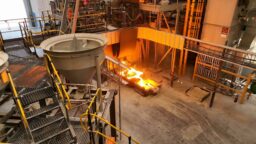
With $17.5M in fresh capital, ramping up deliveries is a big focus, including with a new factory they’re calling Factory Zero in Virginia.
“Factory Zero will allow us to scale our Piranha production from 35 a month, which is where we are today, to about 500 a month,” Weigand said. “We have some pretty significant order volume for 2027, but it’s 2028 that we need to gear up for, and this factory gets us there. It’s a stepping stone to what we dream to build, which is a campus in 2029.”
So, it sounds like Aventra’s flying high. Did anyone bring balloons to celebrate?