We spend a lot of time here at Tectonic talking about the baby-tank flavor of robots, but robots of the humanoid variety get a whole lot less airtime.
That changes today.
This morning, Germany-based humanoid robot company Minerva Humanoids (fitting) emerged from stealth with $10M in pre-seed funding led by General Catalyst.
- Long Journey Ventures, Credo Ventures, and angels including Hugging Face’s Thomas Wolf and OpenAI’s Laura Modiano also joined the cap table.
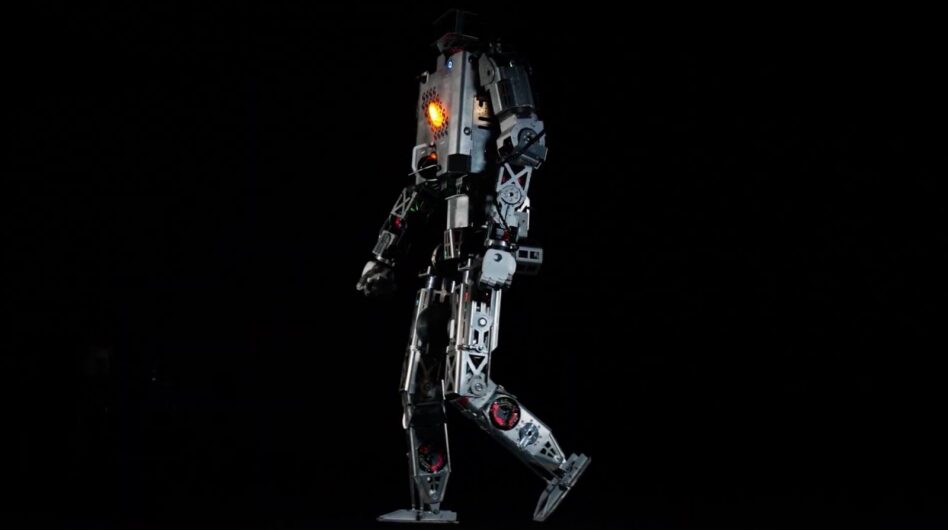
The company’s robot—called Roger—is designed to replace humans in “the world’s most dangerous work,” CEO Sandor Felber told Tectonic, including (for us defense tech nerds) bomb disposal, mine and explosive clearance, and frontline CASEVAC.
- This funding will go towards finalizing the Roger prototype and building out the robot’s semi-autonomous capabilities.
- Felber and his team plan to go out for another round “soon” to start scaling production next year.
“China right now is becoming the center of gravity of robots,” GC Partner Robin Dechant, who led the deal for the fund, told Tectonic. “If we don’t build our own robotics champions, we will just depend on China or other countries, which we think don’t want to….We need a sovereign robot.”
New dog, new tricks: Now, if you’re not particularly active on certain corners of the internet, we’ll catch you up—humanoid robots are having quite the moment.
- As Dechant said, China, in particular, has made serious strides in developing these machines that, well, look and act like humans. If you haven’t seen the backflip video (or the robot Olympics), Google it.
- The idea underpinning them is that the easiest way to get humans out of ultra-dangerous human jobs is to create robots that behave pretty much as we do.
- That applies to defense-y stuff, but also to things like oil and gas, dangerous biochemical environments, nuclear stuff, and the like.
Behind the curve: The problem is, the West (and Europe in particular) are very much falling behind in developing and (crucially) manufacturing these systems at scale.
- China has spent years building the biggest robotics industry in the world—that means that a lot of the manufacturing capacity (and parts) needed for this stuff is, well, there.
- That means Chinese companies can build humanoids significantly more cheaply—and in much larger numbers—than most Western competitors.
- The US has been making a hard push (by companies including Tesla, Figure, and Apptronik) on the AI-and-software side of things, but manufacturing is still way behind China.
- And Europe, unfortunately, is further behind—it’s got a bunch of robotics stuff, but the scale isn’t there (yet).
Keep it in the family: Minerva’s pitch is that they can build a humanoid robot that can be deployed quickly and built with an entirely Western supply chain.
- Per the company, their “software and AI [is] developed in the U.S. and hardware engineered and assembled in Stuttgart, Germany.” Felber told Tectonic that they use no single-source Chinese parts.
- Roger is designed to work in places like “oil and gas refineries, offshore chemical units, biological hazards, labs, [and in] bomb disposal [and] drone disposal.” Basically, anywhere you’re putting a human in a “moral dilemma” to get their work done (or put their lives at serious risk when things go wrong), Felber said.
- The company built a fully mechanical prototype of Roger earlier this year, and have now completed a “fully functional electromagnetic prototype.” Fun fact: The company has three prototypes in total, called Roger 1, Roger 2, and Roger 3.
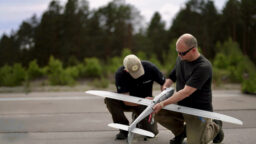
- They’ve also worked with organizations including the FBI and NATO DIANA to test the prototypes, and pretty soon they’re going to pilot with the Ukrainian MoD.
Keep me in the loop: An interesting thing to note here is that, unlike a lot of humanoid robotics companies, Minerva is not aiming for full autonomy—the idea is to get humans away from danger, and that can happen through remote operation.
- The company’s software is called “Minerva Intelligence” and enables what Felber called “shared autonomy” or “semi-autonomy.”
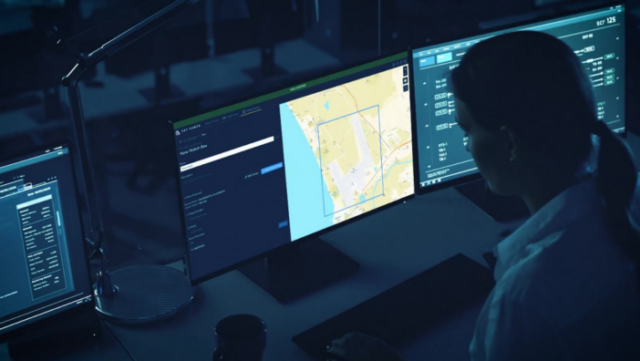
- Put very simply, that means that Roger—at least as it stands—is being operated remotely by a human wearing a VR set and (pretty soon) haptic gloves. But then, the AI-powered software (informed by sensors on the robot) steps in to correct for things like weight, balance, and precise movement that can be hard to account for from far away.
- The company’s goal (at least for now) is to keep the human very much in the loop.
“It’s a lot more important that the machine is successful with human judgment involved, rather than eliminating the human from the get go,” Felber said. “That’s not really the goal here. The goal is to do the job safely.”
Take it out: Now, you might be sitting there thinking, “Why in the world should we here in defense tech land care about this?” Well, no matter how much we talk about drones, humans are still doing some very dangerous jobs in the military—especially in places like Ukraine’s 40 km kill zone.
Felber gave a few examples of where Roger could keep operators safer:
- First, imagine a drone was downed in a highly populated place like Kyiv or the Leipzig Airport, but you weren’t sure whether it had detonated. The robot could approach the drone, analyze it, figure out whether it had an unused explosive on board, and then, if necessary, defuse the system before disposing of it.
- Or, the robot could be used for particularly nasty work like mine detection and clearance, “Where you really need to clear up some mines or bombs very quickly in a small area,” Felber said.
- A pair of robots could also, for example, carry wounded human operators on a stretcher out of the kill zone, without putting medics (or other service members) in harm’s way.
“As a human, you have very good intuition of how it’s gonna move,” Felber added. “You can anticipate its movement. If you crouch, it’s gonna crouch in the same way. If you kneel, it’s gonna kneel in the same way.”
Now, there’s a bit of an elephant in the room when it comes to humanoids—they ain’t cheap, and they’re not particularly easy to manufacture (especially with that fully Western supply chain).
But when we asked Felber to explain the economics behind Roger, he put it pretty simply.
“Right now, humanoids cost a lot more than your other consumer-grade humanoids,” he said, largely due to the whole non-Chinese parts thing. “However, they still cost a lot less than human life.”
Well, that’s fair enough.