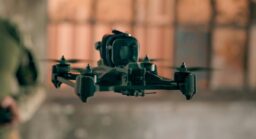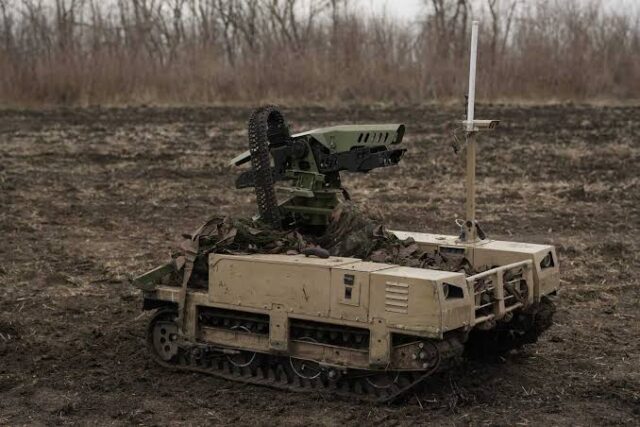
As anyone reading this newsletter knows, the counter-drone market is pretty dang hot right now. The problem is that all those interceptors and other drone-downing tech can only take down what the sensors cueing them can detect.
After launching earlier this year, Austin Sensing Company emerged from stealth this morning with $15M in funding to develop the full airspace sensing stack, from RF detection to radar and acoustic sensors, that will help “enable all these counter-UAS platforms to be more effective and give operators greater awareness of the airspace,” CTO Isaac Duke told Tectonic.
- Bow Capital led the $11M seed round, with participation from Bling Capital, Draper Associates, Mark VC, GTMfund, Ensemble VC, and others. The remaining capital is from a roughly $4M pre-seed round last year.
Lord of the Rings defense tech names are so last year. Austin Sensing Company is bringing back industrial-age company naming conventions.
Keep Austin weird: ASC (not to be confused with the other Austin-based counter-drone company, ACS) is headed up by Duke and CEO Tucker Dordevic. Before launching the startup, Dordevic worked in the aerospace and defense banking world, and Duke was an engineer at another promising Austin defense startup you might’ve heard of called Saronic.
- Fun fact: Dordevic was also an all-star professional lacrosse player until last year, winning the Premier Lacrosse League’s (PLL) Rookie of the Year honors in 2023.
The two linked up last year to start building ASC and launched their first product, an RF detection system, this past summer. Their vision is to develop a full-stack sensing platform that fuses different modalities, starting with:
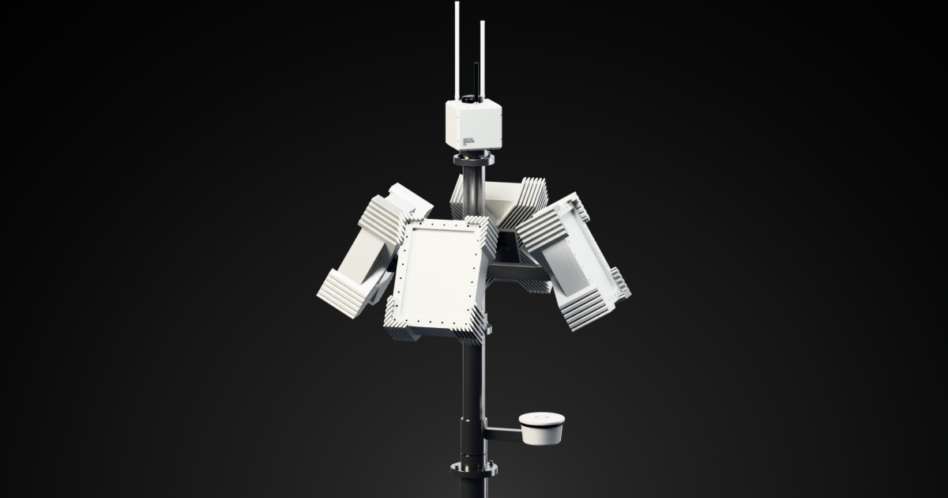
- RF AS: ASC’s first product, a tripod-mounted RF detection system with 28 square miles of range per unit (the AS stands for Austin Sensing). According to Duke, it detects everything from manned aircraft flying at 40,000 feet to FPV drones, and it gives operators insight into the operator’s location.
- Acoustic AS: An acoustic detection system that uses AI-powered acoustic classification to detect and identify drones, including tethered ones, “across a full 360-degree field in under one second.”
- Radar AS: A compact radar that tracks manned and unmanned aircraft at ranges up to 3 km.
- Tower AS: A tower that combines all of that into a single deployable unit to ensure nothing sneaks by and enable more comprehensive localization and tracking, especially when deployed in a network.
The startup also has its own user interface and C2 system, called Operator AS (creative names, guys), but it’s designed to integrate easily with other C2 platforms like Anduril’s Lattice and Palantir’s Maven.
- They decided to build their own software stack because, “From my experience, third-party integrations are never very robust, and so we’re vertically integrating our entire stack—we build the software, we build the hardware, we can turn all the knobs,” Duke said. “We’re not blocked by someone’s supply chain or API limitations, so we have full reign over the technology and can customize it as we need and as the operators need.”
Starting local: The radar and acoustic systems are still in development and live testing, but just a few months out of the gate, they’re already seeing traction with their RF detector, especially with public safety customers. The platform is deployed with more than 40 police departments and fire departments across Florida, California, Oregon, and New York, along with a “handful” of military units, according to Dordevic.
The logic for starting with local law enforcement and fire departments is simple: those customers have far less red tape and bureaucracy than the US military.
“We started out going the inverse route because we wanted to be dual-use, instead of just starting on the defense side,” he said. “We also wanted to develop almost a B2B SaaS company go-to-market [strategy], and we’re developing that muscle for public safety.”
After that early traction and deployments, they’re expanding their focus to military customers, with units deployed for testing with a few undisclosed customers and ramping up production in their new 20,000-square-foot factory in (naturally) Austin.
Now, ASC is going up against some stiff and well-funded competition in the drone-detection world from companies like CHAOS Industries, Fortem, Hidden Level, Echodyne, and more, but they’re betting that the full-stack, multi-domain sensing path is going to be the key to success once they get their foot in the door.