We told y’all we were headed for a $4B+ week.
This morning, Ukrainian-British defense giant UFORCE announced that it’s raised a whopping $700M Series A at a $6B valuation led by Valor Equity Partners (Valor) and the UK National Wealth Fund (NWF).
- New investors, including Menlo Ventures, Xantium, and Hiro Capital, as well as existing investors including Shield Capital, Ballistic Ventures, Lakestar, and Squadra, were also on the cap table.
- The US-Ukraine Reconstruction Investment Fund (URIF) also jumped into the round, and Gen. (Ret.) Christopher G. Cavoli (former NATO Supreme Allied Commander Europe and partner at Valor) joined UFORCE’s board.
The company says it will use this truly gigantic influx of capital to scale production of its autonomous systems—including Magura USVs (famous for taking out Russia’s Black Sea Fleet), Nemesis UAVs, and Liut UGVs—in Ukraine and “distribute…production capacity across the US, Europe, Asia-Pacific and the Middle East.”
- The company (founded in the UK in 2025 as a conglomerate of Ukrainian capabilities and companies) employs a kind of two-pronged, symbiotic model—they produce in Ukraine (and allied nations) for the conflict now, and use expertise gained in-country to build platforms abroad for the future fight.
- UFORCE also plans to acquire a few more companies to build out its product portfolio further, and invest in in-house R&D.
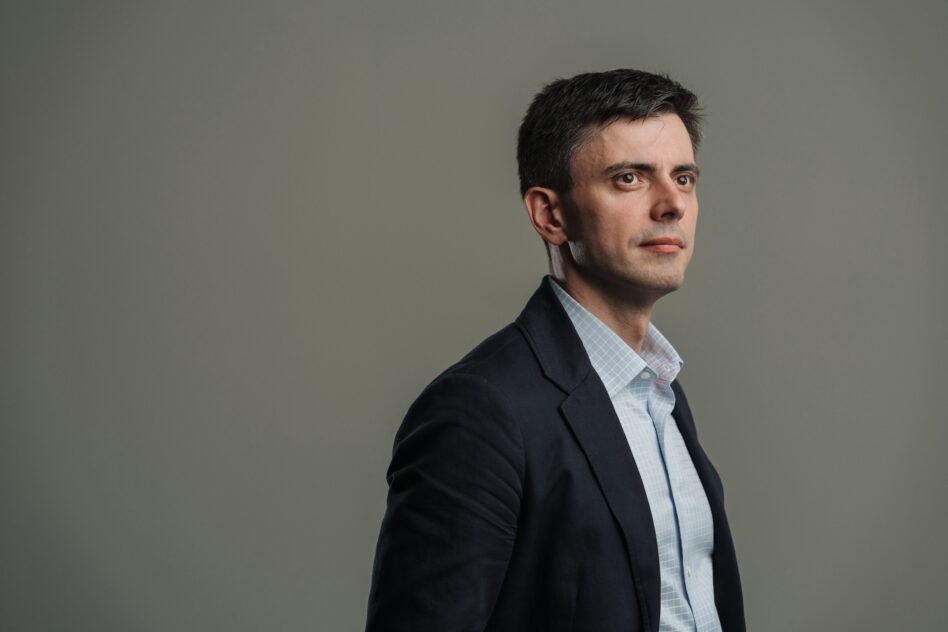
Tectonic sat down with CEO Oleg Rogynskyy for a Q&A to chat about the raise, UFORCE’s strategy, the current state of the war in Ukraine, what the future of the company looks like (around the world), and a whole lot more.
Note: This interview has been edited for length and clarity.
Tectonic: Let’s start off by talking about the raise. Talk me through the round, who’s on the cap table, and what the money is going to mean for the company?
Oleg Rogynskyy: This is likely one of the more unusual rounds that you’ll report on.
It’s a $700M round at a $6B post valuation. And what makes it special is that it’s co-led by Valor. They’re one of the best defense tech investors, behind companies like Tesla and SpaceX. General Cavoli, ex-Supreme Allied Commander of NATO, is also joining our board. He’s a new GP at Valor.
Valor has what they call Scale Group, which is basically a place where they’ve collected some of the best engineering and manufacturing talent from Tesla, SpaceX, and beyond. Through Valor, we also have access to General Cavoli’s experience and support, as well as Scale Group to scale manufacturing globally.
Tell me about the rest of the cap table. Who else joined?
The second lead is the UK National Wealth Fund. I believe this is the first time the UK government sovereign fund is leading a funding round for a defense technology company with meaningful presence in Europe.
The UK has really shown up for UFORCE in terms of sovereign support, making us feel at home here in London and putting us in front of some of the most important opportunities for European sovereignty and defense.
Talk us through two things: First, the significance of the involvement of the UK sovereign wealth fund, and then also what this money will mean for UFORCE. How are you going to use it?
In terms of significance, the UK government, as a sovereign entity, is recognizing the importance of technology that is being identified, tested, tried, and battle-proven on the Ukrainian battlefield. They’re recognizing how important it’s going to be for the defense of Europe and the democratic world.
From that perspective, the UK government is truly putting their money where their mouth is and deploying significant capital not only directly in support of Ukraine and Ukrainian defense, but also indirectly by supporting and investing in businesses that are helping Ukraine on the front lines.
We’ve seen this before, but this is the first time the UK government is doing it at this scale and directly. There’s also an opportunity here to build a true European defense technology prime based out of London. There are none of our scale that exist right now, that have our combat experience and our legacy.
Talk me through how you’re going to use the money.
Use of funds is going to happen across a number of different areas.
First and foremost is scaling manufacturing in Ukraine. And whenever we are not able to build the supply chain in Ukraine, we’re building capacity outside of Ukraine to support Ukrainian efforts, and then supporting European efforts. And after that, worldwide efforts. So that’s very exciting.
The second part is R&D. We are hiring as fast as we can in Ukraine. We are also standing up R&D capacity in a number of European countries, with a big focus on the UK with support from the National Wealth Fund.
When you joined UFORCE—formally—in 2025, did you think you’d get to this point?
The plan was always to take businesses that had combat experience, that had products that were definitely cutting-edge in Ukraine, and figure out what from that experience is applicable outside of Ukraine. To use Western capital to then develop new IP that matches Western requirements, but relies on some of the lessons of specifically what not to do based on the Ukrainian experience. To develop that IP for use cases that are not as prevalent or not as relevant in Ukraine, but are relevant for global security. We’re talking ocean-going USVs and the like.
If you go back to my first conversation with the founders of UFORCE, this is the plan I presented. We are on phase two of the three-phase plan that I presented—this plan is what has allowed us to really establish ourselves in the UK and beyond.
What was that plan? Why did you look at UFORCE and think this was the company to carry it out?
I was involved on the Ukrainian side from the first days of the war in satellite intelligence and satellite communications. Then I started investing in a number of Ukrainian defense technology companies and started a small fund called Freedom Fund.
Through investing in 40 of the very early Ukrainian defense companies, I identified a general trend of where things were going in my head. So when I looked at UFORCE, I was like, “Hey, you have combat-winning, autonomous, AI-driven, reliable, cheap, scaled products that are across all domains. That’s going to work. That’s needed. That’s needed everywhere.”
What was missing was Western perspective, which is something I have. So it felt like a perfect fit between the product, the market, my founder experience, and the team—it just made a lot of sense. Plus, the founders were very open-minded to building the company in a Western way, with Western governance and reliability, with the customer focus and centricity that is absolutely needed to build a business at scale, with the philosophy of using venture capital to scale quickly.
When I realized that there were all those pieces of alignment across the board, then it became really clear that it’s a good fit. Then I presented that three-phase plan.
Ah, the three-phase plan. What was the first phase?
Merge all of the assets and establish the company as a UK-based top co, so that we can accept Western investment at scale and operate under Western governance with Big Four audits, with paperwork that supports American, British, etc., capital markets, and a strategy that is aligned to how NATO, the UK, and the US are thinking about evolving their capabilities.
Talk me through that consolidation phase a bit more.
UFORCE as an entity was created in the UK. Investors provided seed capital, which we then used to proceed with acquiring a number of Western and other assets to create a portfolio under a single British cap table. We merged everything in a way that would make it interesting for larger investors like the National Wealth Fund, Valor, etc., to continue backing the company.
How did you think about what capabilities and companies to acquire?
Through hundreds of conversations with the customers. It wasn’t like the co-founders just came up with the idea. We said, “Hey, let’s go talk to all the customers and figure out what is needed, where is this going,” and then use our understanding of the trends in Ukraine—which is where Oleksi has been instrumental—to figure out how we think Western requirements and needs will shape moving forward.
So, having understood customer needs, customer feedback on the Ukrainian side, capital markets availability, manufacturing dependencies, supply chain issues, etc., it became clear there is a very narrow but high-confidence path to basically becoming an integral part of the global security architecture.
Do you think this is a path that other Ukrainian companies can follow? Is this an example for the rest of Ukrainian industry, or is this kind of a one-of-one thing?
There was a unique moment to start going on this path. I haven’t looked since to see if there are other unique opportunities and moments like this. I’m pretty sure there are, but I don’t think it’ll be possible to follow exactly what we did in our exact footsteps. I think they need to do it differently.
The leadership team I’m building here at UFORCE is one of a kind. The path of doing exactly what we did and hiring exactly the people we hired to accelerate along this path is not one that other companies will be able to follow—the same people just won’t be available.
Talk me through the logic of expanding abroad. Why was it critical to build the infrastructure to bring in Western capital and make these capabilities accessible to foreign markets outside of Ukraine?
I wouldn’t use the word “accessible.” We built new capabilities available to both foreign markets and Ukrainian markets, and they have been performing well in Ukraine since we brought them in.
The interesting thing about why this was so important is that, as a company, we’re not looking at the war in Ukraine as a one-off. We are looking at the war in Ukraine as the opening act of what I hope I’m wrong about: A much larger global set of conflicts.
Just like in the Second World War and afterward, there were a number of platforms that were cheap, manufactured at large scale, that enabled the Allies to win. These are the B-17s, Spitfires, Sherman tanks.
The war was won in terms of technology with cheap, scaled mass. When the United States really clicked into the war in 1942, they used the Second War Powers Act to have even cereal makers manufacture gun sights. People who now make cereal were making bomber planes.
My point is that, to prevent the next big conflict, the Allies need access to these cheap, scaled, mass autonomous capabilities. At this point, if it’s not autonomous, it doesn’t work anymore. They need to be reliable, combat-proven and partner-shareable, which means the export regime around them has to be liberal and very aligned with the government policy of the host country.
That’s where the UK has been extremely helpful, because their vision is very much aligned with using the 1,000-year-old classic UK soft power to continue establishing itself globally. That’s the soft power that made the UK Ukraine’s best ally, that stood by Ukraine the whole time, that helped Ukraine from day zero.
What do you think will be the game-changing technologies when we look back at this conflict? If this is the opening salvo of a broader conflict, what will be the Abrams tank or the B-2 bomber, especially in terms of UFORCE’s portfolio?
We look at Magura and our other USVs as the cheap kill-mass capability for maritime control. There’s a lot more ocean on the planet than land, so you need a lot more hardware out there autonomously. You don’t have enough people. We’re talking about every theater, every AOR. There’s a need for massive amounts of autonomous maritime infrastructure.
We’re talking not just kinetic strike, but communications relay, ISR, counter-USV, ASW, and so on. The maritime domain is much more complex because you have three-dimensionality. You have the air domain above it, you have the unstable surface domain, and then you have the underwater domain. You need to control all three. Every square mile requires a lot more assets.
And the point is that the USV needs to be a platform. It needs to be able to carry any capabilities, any effectors. It needs to be upgradable at scale, autonomous, and so on.
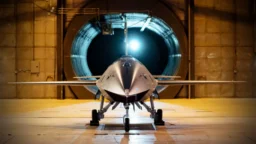
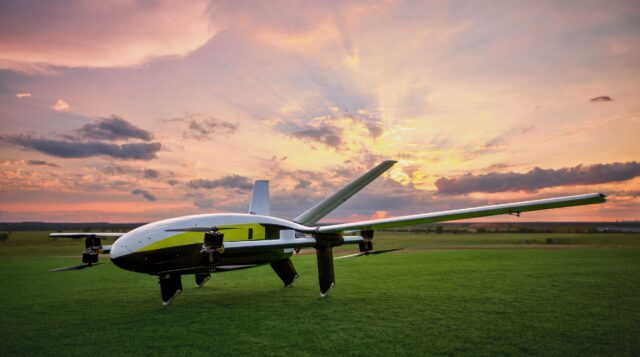
The other B-2 or Abrams of this era is going to be a cheap, autonomous, reliable aerial platform, which is our Nemesis drone. We started with the bomber drone, but now there’s mid-strike kamikaze, there are ISR packages, there are jamming packages. We’re even able to launch interceptors from Nemesis drones so that they don’t burn up their battery going up and fighting gravity. That’s how you can get jet-powered Shaheds intercepted with lower-class interceptors.
So the aerial platform is the second one. The third platform is our ground platform, Liut. Same story: cheap kill mass at scale, autonomous, available.
And the fourth one is all of the counter-UAS capabilities. In the future, we’re going to be thinking about this from the standpoint of fully integrated kinetic and energy-based counter-UAS capabilities, both turrets and interceptors working together to protect the skies.
Do you intend to acquire any more capabilities with this funding?
Yes. We don’t discuss M&A targets, but we’re looking at a whole number of effector, communications, and platform capabilities across a number of sectors. In fact, we’re closing two acquisitions as we speak.
Are those primarily going to be in Ukraine?
They’re all over the place. At this point, we’re very excited about bringing a lot of Western manufacturing expertise, scale, and capability to help Ukraine defend itself.
What were the most challenging parts of expanding from a wartime necessity into a global defense company? And what challenges remain?
The hardest part was to integrate both visions. In Ukraine, everything is about what works right now.
Ukraine is probably two to three years ahead of the rest of the West in terms of understanding where warfare is going, because the Ukrainian military has to fight, the Ukrainian populace has to fight, every day, and there is a cat-and-mouse game happening 24/7.
Outside Ukraine, things are much slower, very different, and there’s a tail of integrations, legal requirements, certifications, all that stuff. All of that is required, very important and necessary, but the tail is long, and it slows down the velocity that you’re seeing in Ukraine.
So integrating the two worlds—one really fast, another slow, thoughtful, and measured—into a product set that is able to move fast, iterate, and invent new things like it does in Ukraine, but do it in an integrated, reliable, compliant fashion like it does in the West, while manufacturing all of that on sovereign territories at scale. That was hard, and it’s still really hard.
Building a team that spans both sides and is motivated by the mission of helping Ukraine win as part of a larger mission of helping prevent the next big war is also really hard, but very rewarding.
Talk me through the export challenges, both in terms of getting technology out of Ukraine and as you expand into new geographies.
Ukraine’s export challenges are a separate chapter in a book that I’m not the best person to write.
What I can say is that Ukraine consumes everything we build in Ukraine and more that we build outside of Ukraine. So the direction has been the other way. We’ve been mobilizing Western capacity, capability, and capital to help Ukraine with the capabilities it needs as a customer of ours.
Export regimes within the West are actually not that complicated. ITAR is big and thorough, but it’s also led to the largest volume of weapons sales ever on the planet. The rules already exist. Those rules work. They’re complicated; once you know them, they’re good.
In fact, the new export regime that Ukraine introduced with drone deals over the summer is very aligned with ITAR thinking. We’re very impressed with that.
What about the challenges of accessing Western capital as a Ukrainian-founded company? Why is that complicated, and what are the implications for the rest of Ukrainian industry?
We started right away knowing we were going to have to bring in Western capital, so we brought in one of the Big Four to audit the company from day zero when I started.
We brought in some of the best Western legal capabilities, support, and talent. Our GC was the GC of NATO DIANA, for example.
All of that allowed us to create a trusted and well-governed environment that Western capital was able to find comfort with. We built an auditable, clear, clean, Western-governed company that has clear board procedures, has the likes of Ben Wallace and now General Cavoli on the board. Those are very trusted advisors.
We were very transparent with the right folks in terms of numbers, governance, issues—which everybody has—and our strategy. That’s how we earned the trust of Western investors like Valor and the National Wealth Fund.
Is that feasible for a lot of other Ukrainian companies to do? And if not, what happens?
It’s a lot of work. If you have the patience and the team that has the experience to do this, it’s definitely worth it.
What I’m seeing in a number of Ukrainian and Western companies is that people are looking for shortcuts. But you can’t skip steps. You have to build the right way from the beginning, and it takes time and capital and patience and experience.
A lot of how you’ve built UFORCE came from frontline user feedback. How do you balance that close feedback loop with scaling up manufacturing and the company more broadly?
It requires a lot of discipline when it comes to feedback collection, product management expertise, and integration of R&D, processes, and capabilities across the board. That’s one.
Second, it requires listening on all sides. Listening to actual Ukrainian feedback, where things are moving really fast. That requires having visionary founders who are really embedded in what’s happening in Ukraine. We’re talking about Oleksiy [Honcharuk], who is there all the time and understands what’s around the corner big time.
It also requires a very methodical approach to working with and listening to Western governments and Western customers, and really putting those Western customers and governments at ease that we’re a trusted partner who can both hear what they need and communicate what matters back to them.
Having those two information flows with trust from both sides is what allows you to balance it.
What are you hearing from Ukrainian customers and frontline users right now? What’s needed most urgently?
Counter-ballistic, anti-ballistic, and counter-jet-powered Shahed capabilities are desperately needed right now, and everybody is working on that.
I’m sure that within weeks we’re going to have a lot more capacity to counter that. That’s exciting.
What else is needed on the front lines?
There’s a whole number of frontline capabilities that exist and are needed in terms of integration, AI scale, and so on. More of the nuts and bolts.
The last piece is obviously counter-drone, counter-UAS, both energy-based systems, for cost, as well as kinetic for reliability. They’re needed at massive scale. We’re doing a ton of that in Ukraine. There’s demand that’s creating years of backlog, and we’re seeing that pretty much every critical infrastructure element, every ship, everything that’s of value in the West is going to need counter-UAS capabilities.
What are you hearing from Western partners about what they’re looking for from UFORCE?
The same as above, plus large amounts of maritime capabilities, because you need to saturate the maritime domain.
What are the most important lessons for Western countries and companies to learn from Ukraine and the conflict itself?
Speed.
It’s the number one thing that makes what Ukraine does so valuable, both for Ukraine, in terms of how David was able to stand up to Goliath, and for the West, in terms of how smaller, well-applied resources can produce much bigger standoff capacity than what we’re used to at scale, and how components from Best Buy can be combined into formidable weapon systems at significantly lower prices.
What’s the wrong lesson that people are learning from Ukraine?
There are multiple camps in the West.
One camp is saying fighter jets are done; it’s all drones now. That’s informed by the fact that Ukraine doesn’t have as many exquisite systems, and it’s still doing quite well given the situation. That’s one point of view.
The other one is that, had Ukraine had exquisite systems, it would be much further along in terms of fighting Russia back. There’s a balance between those two. There’s truth—the right lesson—somewhere in the middle, I believe.
What do you think?
I believe that there needs to be a combination of both exquisite systems and cheap kill mass. But cheap kill mass is going to take time, as autonomous capabilities, resilient communications, swarm coordination, multi-domain capabilities, and so on take on stronger prevalence and position.
Ukraine has fought under very specific constraints, with particular resources and in a particular geography. How do we translate the lessons from Ukraine to other conflicts, whether in CENTCOM, the Indo-Pacific or somewhere else?
It cannot be one-to-one. It has to be adjusted to the local problem set.
The CENTCOM problem set is somewhat familiar, somewhat local, because you have a body of water across which a bunch of Shaheds are flying. But unlike Ukraine’s situation, where there was a big Russian fleet, the Iranian fleet was sunk in the first 20 minutes of the war. So it’s much more about counter-UAS and the OODA loop on detecting where things have been launched from Iran and taking them out quickly.
From this perspective, Iranian operations are somewhat closer to how Ukrainian operations are, versus an opponent with more air superiority and more exquisite systems. I think understanding Ukraine well has allowed the United States to be more effective in Iranian operations because that helps them understand the non-peer adversary.
On the other side, the lesson for the Indo-Pacific is kind of reversed. In that case, the US is looking at how Ukraine was able to saturate a body of water with cheap kill-mass maritime capability and multi-domain marsupial capability, so that Ukraine, a smaller player with fewer assets, was able to achieve maritime and air superiority over time against a much larger navy.
China has more ships. It’s got a larger navy at this point. And the lesson of how you deny a larger navy a body of water with smaller capabilities and with minimal human losses is very important for the United States.
What happens if and when the current phase of the war in Ukraine ends and there isn’t as much demand for these platforms? How does that change how companies like UFORCE function?
In our case, we have a very specific view of this. The world is not going to be a much safer place, unfortunately. AI-controlled drone swarms will be a problem for many more years. Therefore, our maritime, ground, aerial, and counter-UAS capabilities will be in demand, and our supply chains that are currently supplying Ukraine will be able to be put to use protecting Ukraine and the West in a less active phase of the war.
What about the rest of Ukrainian industry?
It depends on who’s manufacturing what. I think demand for FPV drones is going to drop.
Having integrated, multi-domain, platform-agnostic or platform capabilities that are AI-driven, running the same code base, integrated with all these C2s, is going to be the way to do this even after the active shooting in Ukraine stops.
What does UFORCE look like in a year, and what does it look like in five years?
In a year, we continue building the world’s most adopted and combat-proven multi-domain, autonomous, AI-driven, integrated, cheap kill-mass capabilities, and making them available for the Western world to defend itself with.
We’re going to be at larger scale. This capital will be put to use to scale up our manufacturing, our presence, and our partnerships with key partners.
In five years, hopefully the capabilities we put in front of the world are able to change the calculus of a number of players. Had Russia known how hard Ukraine would fight with drones and other newer capabilities, Russia may not have gone in. Who knows—hindsight is 20/20. But whoever was making that calculus would have made it differently.
So, in five years, I would love to be having this interview saying, “The capabilities we have deployed across the planet have potentially led to having less war.” That’s my dream.
What are your plans for the U.S.? There’s quite a lot of American capital on the cap table, and it’s a famously difficult market to enter.
We’re very excited about partnership with the United States. They’ve been a great partner to Ukraine. They continue to be a great partner to Ukraine.
From that perspective, I can’t obviously comment much, but there’s a really good relationship. There’s a lot of excitement. It’s public information that we’re enrolled in Drone Dominance 2.5—things are going great.
As you scale, like Anduril, Helsing or Shield AI, do you have your eye on moving up the chain toward more exquisite, expensive platforms?
We are full-on focused on operational and tactical autonomous cheap kill mass.
Finally, what are you most excited about right now? What’s the first thing you think about when you wake up and the last thing you think about before you go to bed?
Personally, the next phase is to really focus on scaling and building the team. As a CEO, my job is to fund the company and then build the team that’s able to allocate the funding in the most effective and efficient manner to achieve the company strategy, which we as a team create.
I’m very excited about the talent that we’ll be able to bring to this team to execute on our vision much faster and at a much larger scale, both in Ukraine and outside of Ukraine.
That’s my personal excitement. And that’s phase three. Phase one was to create everything. Phase two was to build out governance, trust, audits, and other systems, and start a lot of partnerships that need to show fruit, which led to this funding. Then phase three is to step on the gas, using the funding across all of the infrastructure we built for manufacturing, for sales, for Ukraine, for R&D.
I’m very excited to step on the gas.
And company-wise?
The company is going to grow and continue delivering on its mission to help Ukraine win the war and defend itself, and through that, help the West defend itself and prevent the next big war.