Even the biggest of the big guns are turning to newer entrants now.
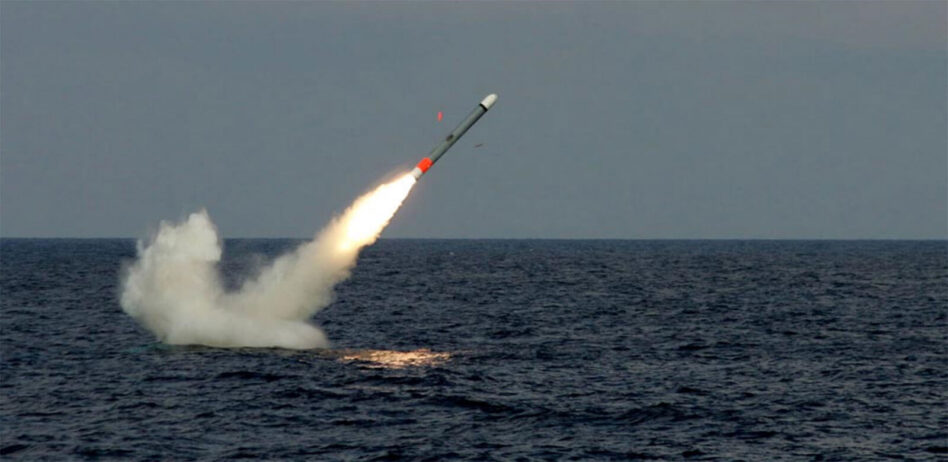
Yesterday, Ursa Major announced (and Axios first reported) that it’s been awarded a joint contract with Avio USA to “design, develop and qualify a new solid rocket motor booster for the…Tomahawk cruise missile.”
- Ursa Major CEO Chris Spagnoletti told Tectonic that the multi-year award is worth “north of $80M” and covers the design and qualification of an Ursa-Avio second-source booster.
- From there, the “expectation is [that] upon successful qualification, that leads directly into a [multi-year] production contract,” he added.
- Avio USA is a subsidiary of Italy’s Avio S.p.A.—the US branch has recently opened up a $500M rocket motor production campus in southern Virginia.
“Raytheon has taken a bold move,” Spagnoletti said. “It’s a positive move to lean into the new entrants…allowing Raytheon to have optionality when it comes to finding solid rocket motors for their programs, because the government’s putting a lot of pressure on those guys to deliver more Tomahawk missiles.”
“[As a partnership] we saw that there was an opportunity to give Raytheon an attractive way to think about second source, something unique, where they…get the benefit of two companies—Ursa Major focusing on the design and development, and then Avio helping secure strategic supply chain solutions and also bringing that heritage of quality,” he added.
The power of community: Now if you’re sitting there nodding along like, what in the heck is a second-source booster, don’t worry—we got you.
- Basically, it’s a rocket motor made by, well, not Raytheon that can launch the Tomahawk. The booster gets the big ol’ missile into the air, then separates once the missile hits speed.
- Having more (external) suppliers is important because, in case you haven’t noticed, SRMs are in very, very short supply these days.
- Basically, having more than one booster supplier means that RTX can keep up with insane demand from customers like the US Navy (main user) even if they can’t keep up with the SRM production themselves.
- And that’s pretty key, because the Navy wants a lot of Tomahawks—in August, RTX scored a $23B contract (yes, with a B) to boost Tomahawk production to 1,000 rounds a year. The more SRM-producing friends you have, the better, we’d say.
Track record: And if you’re going to team up with one newer-age SRM producer, it’s a pretty good idea to pick one that is already on a whole heck of a lot of major programs.
- In October, Ursa won a total of $137M in contracts to build SRMs for two Navy programs—the Compact Air-to-Air Missile (CAAM) and the Naval Modular Missile (NMM).
- In July, they also won a $10M award with the Navy to develop their Mk 104 SRM, and have also made a $25M joint investment with the Navy for SRM prototyping.
La dolce vita: Avio ain’t doing too badly for itself, either.
- The company has a strategic cooperation agreement with Lockheed Martin to produce SRMs for the Extended Range GMLRS and Precision Strike Missile (PrSM) programs.
- They’ve also got a previous $26M contract with Raytheon to advance development of an alternative Mk 104 dual-thrust rocket motor used in the Standard Missile family.
- They’ve also inked deals across the Pentagon to develop SRMs alongside groups like the Army’s Aviation & Missile Center.
Hand in hand: Spagnoletti said that they decided to go after the contract in partnership with Avio (rather than competing) because, basically, it combines the best of the old and the new and gives both RTX and the Pentagon access to a whole lot more production capacity.
“If you take Ursa’s advanced manufacturing approach to solid rocket motors…and you couple that with Avio’s heritage in manufacturing solid rocket motors and their investment in Southern Virginia, you really get a chance to provide Raytheon a solution set that’s actually, like, one plus one is greater than two,” he said.
“Now you’ll have one design…that can be produced by two companies,” he added. “It reduces the total cost of development…then actually gives Raytheon and the Department of War a better option for scaling capability.”
Spagnoletti couldn’t give us an exact timeline on when the two companies expect to complete qualification for the booster, but he did say that he doesn’t expect this to be the end of the relationship with Avio.
- In particular, he said that their new SRM campus in Colorado (they broke ground this summer) and Avio’s new Virginia plant give the pairing a pretty big leg up.
“This could be the beginning of some additional opportunities where we can leverage both our strengths,” he said. “With our additional production capacity coming online, and then Avio’s production capacity coming online in Southern Virginia, we could be a serious provider [of] much larger scale SRM quantities to the Department of War in the future.”