Here we were thinking that defense tech’s exit era would look like giant primes buying up smaller startups. Turns out we were wrong—at least for now.
Yesterday, electric aviation hotshot (and Anduril BFF) Archer Aviation announced that it would acquire three of Boeing’s autonomous flight subsidiaries—Wisk, SkyGrid and Insitu—giving the prime a 20 percent stake in Archer’s business.
As part of the deal, Archer gains access to Boeing’s autonomous flight tech, a chunk of their drone business, and their eVTOL and air taxi business (through Wisk).
- Shares in Archer jumped over 14 percent at the news yesterday; now they’ve settled about 12 percent up.
Guess when you’ve had a few years of lost door plugs and plane crashes, it makes sense to focus on your core business.
Now, a quick refresher on Archer. The company was founded in California back in 2018 by Adam Goldstein and Brett Adcock with a promise to, well, build the future of aviation.
- Their core focus has been on eVTOL air taxis—essentially better versions of helicopters that can get you out of rush hour traffic.
- But in recent years, they’ve also doubled down on defense. They spun out a defense business in December 2024 and expanded that massively with the acquisitions of Overair and Mission Critical Composites last summer. Goldstein describes Archer as a “dual-threat” business.
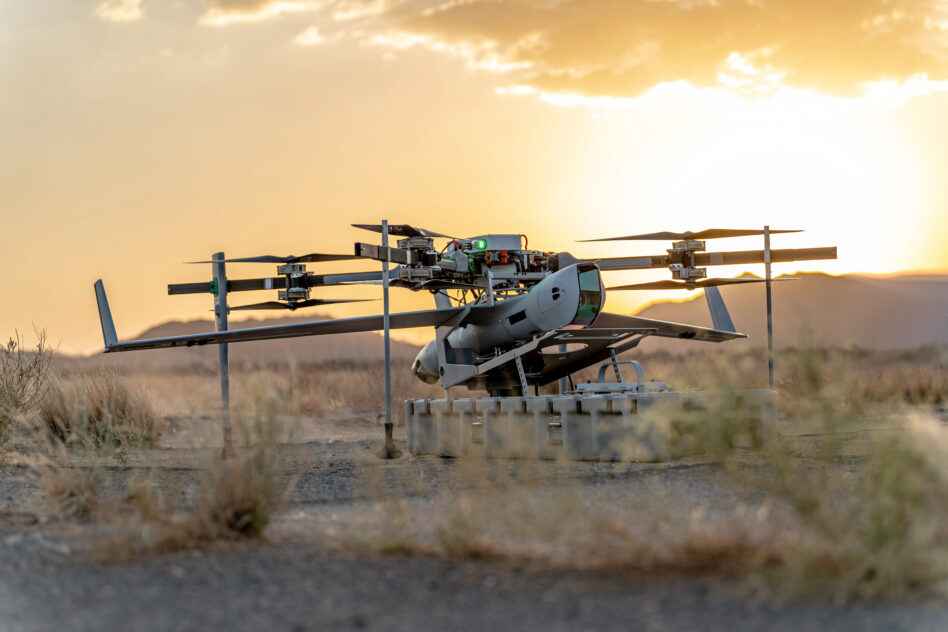
- They’ve also struck up a very close friendship with a teeny little startup called Anduril. The two companies announced a partnership back in 2024, then unveiled a jointly developed heli-drone (the Anduril defense-y variant is called Thunder) at Farnborough last month.
- And they’re like, not small. The company has a market cap of about $4.5B (depending on the day).
Going green: This new round of acquisitions takes that defense push even further. Here’s the dirty details on what they’re taking on board:
- Wisk Aero: Boeing’s eVTOL air taxi business. It was originally a joint venture between Boeing and Google co-founder Larry Page’s Kitty Hawk and has spent the last decade developing autonomous electric aircraft. With this deal, Archer acquires its aircraft, including the Gen 6 four-seat eVTOL that the company is working to certify with the FAA. Fun fact: Wisk Aero sued Archer for “brazen theft” of confidential info and IP back in 2021. Guess they made up.
- SkyGrid: Think air-traffic control, but for a world with a heck of a lot more robotic flying things. The idea is to integrate autonomous aircraft into existing airspace mapping and planning—critical for companies like Wisk building unmanned aircraft that are expected to fly alongside your run-of-the-mill planes and helicopters.
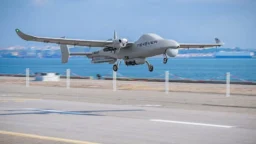
- Insitu: This is the most interesting piece for all y’all (you didn’t think we’d spend all day talking about air taxis, did you?) This is Boeing’s drone subsidiary that builds the ScanEagle and Integrator fixed-wing ISR drones. These bad boys are already used by the US military and lots of international customers. According to Archer, Insitu does about $200M in revenue a year. Sweet.
Triple-threat: Per Archer, these acquisitions make the company the proud owner of an “end-to-end physical AI platform across commercial aerospace, defense and air traffic management that can lead the next generation of aviation.”
Here’s the logic behind each of the purchases.
- According to a letter from Goldstein in the company’s filings to the SEC, Insitu gives “Archer an immediate, sizable revenue base to grow in the near-term.”
- SkyGrid improves Archer’s own ZEE autonomy and flight control stack, and can provide “a clear path to significant AI revenue” while becoming a “must have” air traffic management tool, per Goldstein.
- And (this is where things get really interesting) Wisk basically supercharges development of Thunder and Halo (Archer’s commercial variant of the big ol’ eVTOL.
“We are acquiring Wisk to accelerate the Halo/Thunder platform, which I believe will be a generational vertical lift program,” Goldstein wrote. “Wisk has developed some of the most advanced autonomy, flight controls and sensor technologies in the industry.”
Fast friends: Worth noting—Boeing isn’t totally losing access to these companies (and their tech). The two companies will enter “into a collaboration and technology-sharing arrangement through which Boeing will retain access to the Wisk core autonomous flight technology for its current and next-generation commercial and defense aircraft.”
- The two companies are hoping to “jointly drive innovation in aerospace, defense, and autonomy and deliver long-term value for shareholders,” per Goldstein’s letter. Archer really is building up a clique of some very powerful friends.
“This is a watershed moment for Archer and the future of physical AI in aerospace and defense,” Goldstein said in a statement. “This is the next big step forward in becoming a diversified platform, rapidly growing our revenue base and bringing scale to our business.”