The Canadians are really making some serious money moves in defense, eh?
This morning, Canadian defense tech darling Dominion Dynamics announced that it’s raised a CA$139M (US$100M) Series A led by Georgian (Canada’s largest VC).
- Other participants in the round included: Valor Equity Partners, Expeditions, Lakestar, OMERS, Business Development Bank of Canada (BDC), Royal Bank of Canada (RBC), Deloitte Ventures (Canada), and JDY Capital, along with existing investors British Columbia Investment Management Corporation (BCI), Bessemer Venture Partners, Garage Capital, Golden Ventures, and Silent Ventures. Jeez. Big ol’ cap table.
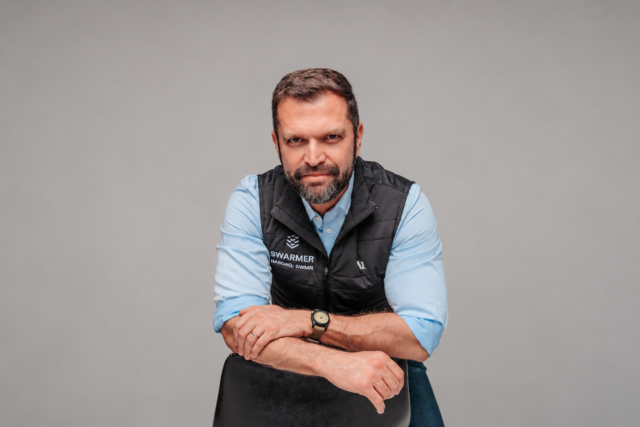
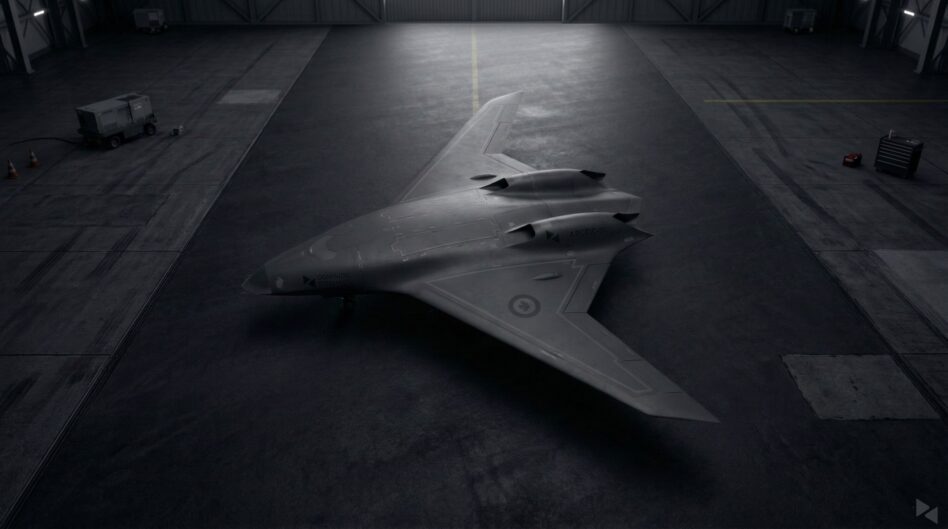
Dominion founder and CEO Eliot Pence told Tectonic that the company will use the money to scale up production of its flagship AuraNet sensing, comms, and data-fusion system, as well as Scout, its ACP (Canadian CCA) concept. The cash—there’s a fair bit of it, after all—will also allow Dominion to scale its team from 50 to 100 and expand internationally to the US, Australia, and Europe.
Worth noting: Dominion has only been around for a year, and this is already their third “financing event,” per Pence (they’ve raised a total of CA$169M, or about US$120M).
Canadians may be nice, but turns out they’re also business savvy as heck.
Domino effect: Dominion Dynamics—and Pence—should be no strangers to Tectonic readers. Pence cut his teeth leading international business at Anduril (you’ve heard of it?), then founded Dominion last year (like, literally last June) to do the same thing—but make it Canadian and with a focus on the Arctic.
Despite not being even toddler-aged, the company has spun out a ton of products through some speedy-quick internal R&D. We made Pence list them all for us:
- AuraNet—A distributed software platform that connects sensors, autonomous systems, and operators into a shared operating picture in low- or no-connectivity environments. This is the backbone that everything plugs into—Dominion’s take on Lattice, designed very specifically for zero-connectivity environments like the Arctic.
- Taku—An autonomous surveillance tower for persistent sensing and communications. Think Sensor Tower, but Canadian.
- Echo—An under-ice sensing tower/hydrophone system designed to pick up sneaky things like Russian subs. It was formerly known as IceSpike.
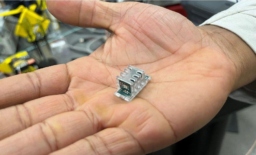
- Flint—A software-defined radio (SDR) for tactical comms.
- Specter—A tethered aerostat/balloon that (there’s a theme here) provides higher-altitude sensing and communications.
- Warden—An autonomous ground vehicle (UGV) for remote operations and sensing.
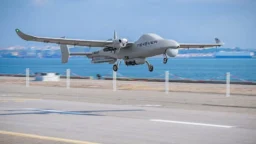
- Scout—Dominion’s bid for Canada’s ACP (similar to CCA) program. The company is currently on contract to build the simulation/digital environment for what the system could look like for the Canadian government. Pence told Tectonic that they expect ACP to be more distributed (say, a system of drones) rather than one thing, like Anduril’s Fury,
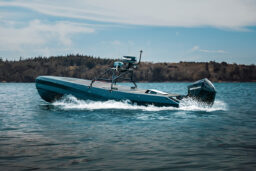
Pence also told us that the company is looking to expand into maritime—in particular, they want to build something like CCA/ACP, but for submarines. But that’s still in the concept phase.
Deep freeze: And this stuff—at least some of it—is already being used.
- They’ve demoed Echo with the Royal Canadian Navy as an under-ice acoustic sensing system.
- AuraNet was deployed with Rangers on a 5200-kilometer mission across the Northwest Passage back in February, Pence said. He said operators used it primarily as a tactical comms device that “allowed the rangers to…store and forward information…when there was no access to satellite connectivity or GSM or anything like that.” That data then created a common operating picture for people back at HQ.
- Their kit—especially those sensors and AuraNet—has been tested across the Arctic with the Canadian Armed Forces. They’ve also got an eye on the Rangers’ modernization program and Canada’s version of NGC2 (PDC2).
- And it’s not just Canada—they’ve also got a research agreement with the US Army’s Cold Regions Research and Engineering Laboratory (CRREL) in the Arctic.
Build up: Currently, all of the company’s prototypes have been built out of Dominion’s 25,000-square-foot factory in Ottawa, but with this new money, they’re thinking way bigger.
- Pence said the company plans to open up a 300,000 sq ft facility for larger-scale production of all those nifty gadgets.
- They’re also planning to open up a ton of new offices—one in Halifax, another in British Columbia, and one in Waterloo.
- Plus, there’s the whole international expansion thing—they’re planning to open up an office in DC by Q4 of this year, and their first international hire will be in Australia.
- By the end of the year, the company’s headcount should be around 100. By next year, Pence said, they’re hoping to hit 500.
Holding hands: A big part of this raise, Pence said, is taking all of these disparate systems and building them into an integrated command, control, and autonomous operating system—all under AuraNet. And, critically, they’re making sure that the whole thing can work without connectivity from the ground up—that’s a big part of why they’re working in the Arctic.
- A lot of existing autonomous systems and C2 are designed in fully connected Western environments, he said. Then, when they go to ultra-jammed places like Ukraine, they break.
- By building for a zero-connectivity environment—the Arctic—first, he said, they make sure that these systems work even when plopped somewhere like the Donbas.
“[If you] actually build something that works in a place that has no connectivity…It will work more often when you take it from a no-connectivity environment to a jammed environment, because what you’re building is something that works independently of any connectivity,” he said.
On ice: And it’s not just about the technical benefits—Pence and his team are also building under the very real looming threat from Russia and China in the Far North.
“It’s increasingly a contested area,” he said. “Nobody really has a good sense of what’s under the ice. There’s a lot of suspicion for Russian subs under the ice…there are pretty extensive public reports of Chinese research vessels, ditto Russian research vessels, [that are] mapping the seabed, observing the waterways, the currents, [and] the wind ways.”
And—as this raise would suggest—the world is finally paying attention. “It’s one of those afterthoughts that is increasingly a forethought in geopolitics,” Pence added.