When we said that “a certain El Segundo-based company is doing very well on the whole Drone Dominance Program (DDP) front,” we might’ve undersold it—that certain company is doing very well on all fronts.
Yesterday, the FPV phenoms at Neros announced that they raised $250M in a funding round co-led by Sequoia and American Strategic Technology Fund (ASTF) at a $2.5B valuation—triple the startup’s previous valuation.
- Interlagos, Valor Equity Partners, Allen & Company, Thiel Capital, Spark Capital, and Figma CEO Dylan Field participated in the round.
- Sequoia led Neros’ $75M Series B last year, which Interlagos also participated in.
Can’t say we didn’t see this coming, given their $500M IDIQ contract with the Army under the Purpose-Built Attritable System (PBAS) program and clear production lead in the DDP (which just placed an extra 2,000-drone “bonus” order), but sheeeesh nonetheless.
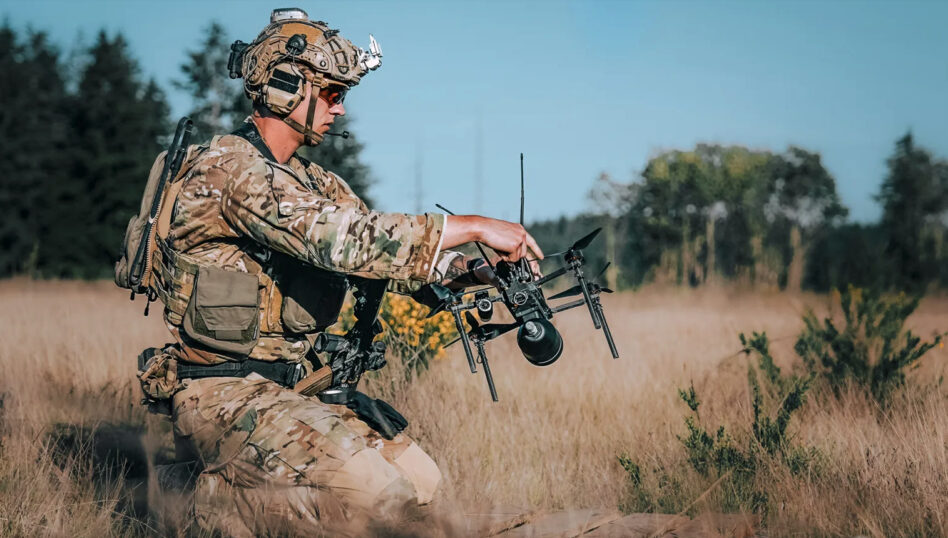
A lot o’ Archers: Neros’ flagship product is an FPV quadcopter called the Archer, which, needless to say, has been a hit with customers, the Army and Marine Corps in particular.
- The Archer comes in a 10-inch (the most popular), eight-inch, and five-inch variant. The 10-inch variant—the one they’re pumping out for the DDP—comes kitted out with a Kraken Kinetics-made go-boom payload.
- It’s built without any Chinese components down to the chip level, comes in at around $2,000 per unit, and has a range of about 20km.
- This week, the Marine Corps held its first series of live-fire FPV attack drone flights using the Archer in South Korea, hitting targets from 20km away to allow “Marines to conduct precision strikes from positions of relative safety” and extend “the tactical influence of small units far beyond traditional squad-level infantry weapons.”
Drone dollars: Neros is also producing Archers in big numbers: the company’s current annual production rate is roughly 65,000, and CEO Soren Monroe-Anderson said on our Valley of Depth podcast that they’ll hit a 100,000-drone production run-rate by the end of the year.
With a cool $250M in fresh capital, Neros wants to 10X those production numbers. The startup opened up a 250,000-square-foot facility in Torrance, California, earlier this year, where they’re planning to produce 1M drones per year by 2028. That’s a shit-ton of drones (technical term), but Neros is betting that whatever they build, they’ll be able to sell.
“We have some inventory, but it doesn’t stay on the shelves too long. That’s definitely one of the tricks in scaling the manufacturing—if we overbuild, we’re in trouble; if we underbuild, we’re in trouble,” Neros’ Head of Growth, Ross Pedersen, told Tectonic last month. “So far, we’ve done a really good job of matching our production to our demand, and I think we’ll be able to continue to do that.”
New tech: Along with Neros’ plans to scale, the new funding will fuel the development of two new products: Archer AI and Bandit.
- Archer AI, an FPV platform based on their flagship Archer but “augmented with autonomy features including Terminal Guidance and GPS-denied Position Hold,” according to the company.
- Bandit, an interceptor drone intended to counter Class 2 and 3 drone threats, especially the Shahed-style systems built and deployed en masse by Russia and Iran.
According to Neros, both will be deployed in combat theaters by the end of the year.
With Bandit, “What we want to do with kinetic interceptors is what we did with FPV drones, which is to take a proven technology that’s already shown to be working on the battlefield, make adjustments to it to make it more reliable and more performant in certain key ways, ensure that it’s built on a compliant supply chain, and then scale it in the West,” Pedersen said.
“Given the need in CENTCOM, and also given the high degree of [component] overlap between FPV drones and these bullet quad-style kinetic interceptors, this just made sense for us to do,” he added.
“Our mission to produce one million drones per year hasn’t changed, but the span of drones and mission sets we can support are multiplying,” Monroe-Anderson said. “Our core business has seen explosive growth since our last financing round in November, and this added capital gets our systems into warfighter hands faster, and at the scale needed for decisive outcomes on the battlefield.”