In case you hadn’t noticed, there’s a whole lot of fancy new drone-downing tech coming onto the scene (and a whole lot of money behind it). That’s pretty important—given the rising threat and the rapidly declining stockpiles of legacy air defense systems—but all those interceptors are only as good as the tech that spots their targets.
Now, the Pentagon is looking to a Syracuse-based startup for a little help making all those effectors more effective.
This morning, c-UAS startup Hidden Level announced that it’s snagged a cool $100M Other Transaction Agreement (OTA) that allows Pentagon customers to buy and deploy its drone detection systems wherever and whenever they need ‘em, the company exclusively told Tectonic.
- The contract, signed last week, was awarded by the Office of the Under Secretary of War for Research and Engineering (OUSW(R&E)) through the Army Contracting Command.
- Millions in task orders have already been placed against the contract right off the bat, CEO Jeff Cole told Tectonic, and they’re in the process of negotiating more.
Hide and seek: We cover counter-drone tech an awful lot, but Hidden Level has “run under the radar, pun intended, for a long time,” Cole said.
Founded in 2018, the company has quietly racked up a number of wins in drone-detecting competitions—including the DIU’s Low-Cost Sensing Challenge last year—and in contracts, particularly with the Army and, more recently, the Pentagon’s JIATF-401 c-UAS task force.
- They also raised $100M last year from investors including Lockheed Martin Ventures and DFJ Growth at a roughly $500M valuation, bringing total capital raised to around $130M.
- Hidden Level also won an APFIT award in 2023 that the Army transitioned to a Program of Record in 2024. Cole says the 10-year contract has moved “into the next stage of the program, which is full-rate [production].”
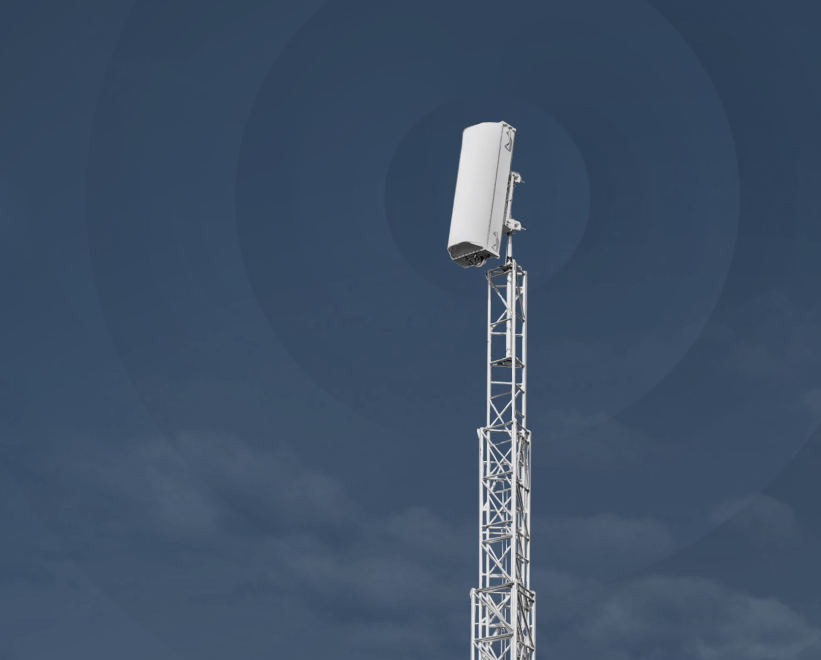
Sensing sensation: Hidden Level’s passive radar tech has been a hit in part because, as the name implies, it stays hidden. It doesn’t emit radio frequency (RF) signals, is designed to hide in plain sight, and detects both RF-emitting aircraft and RF-silent (including fiber-optic) “dark drones.”
The company has a range of hardware and software products on offer, all of which are included (and they’ve received orders for) under the $100M OTA. Those include:
- Breaker: Hidden Level’s fixed-site passive RF sensor built to provide airspace awareness for critical infrastructure and military installations. It has a passive radar range of up to 30km and an RF range of up to 25km.
- Surge: The company’s mobile radar designed for both fixed site and expeditionary operations. It offers the same range as the Breaker and can be mounted onto a wide range of land and sea vehicles. Cole said that it’s been integrated into “five different vehicle classes within the US Army, and has been fielded since 2024 in different combat theaters.” Those vehicles include Humvees, JLTVs, and Hiluxes, and those theaters include CENTCOM, AFRICOM, SOUTHCOM, and domestically.
- BYOTx: A 50-pound transmitter that works with Surge to enhance detections, and itself can enable “Group 1, 2, and 3 UAS detection up to 10km,” according to the company.
- Airspace Monitoring Service (AMS): Hidden Level’s detection visualization software and C2 system.
All of that radar technology is integrated into standard C2 systems, including Palantir’s Maven and Anduril’s Lattice, and is built to cue “everything from guns to guided weapons,” Cole said.
Big flex: The $100M OTA contract, according to Cole, is essentially structured like an enterprise agreement that allows customers across the Pentagon to buy up all of that tech without having to go through individual contracting processes.
“This OTA is extremely flexible and allows our customers to issue task orders to buy hardware, services, and subscriptions quickly, sole source,” he said. “It’s a commercial contract without the FAR language and allows the customers to move really nimbly.”
That flexibility—and the speed it enables—is good for Hidden Level and its customers alike.
“This OTA award gives us an important mechanism to keep maturing, evaluating, and transitioning advanced sensing into operational use,” Mike Tran, director of prototyping at the Office of the Deputy Assistant Secretary of War for Prototyping and Experimentation (ODASW(P&E)), said. “The technology addresses real operational needs across the Department and reflects the kind of innovation we need to get mission-relevant capability to the warfighter faster.”