Well, it’s a big week for metals around here.
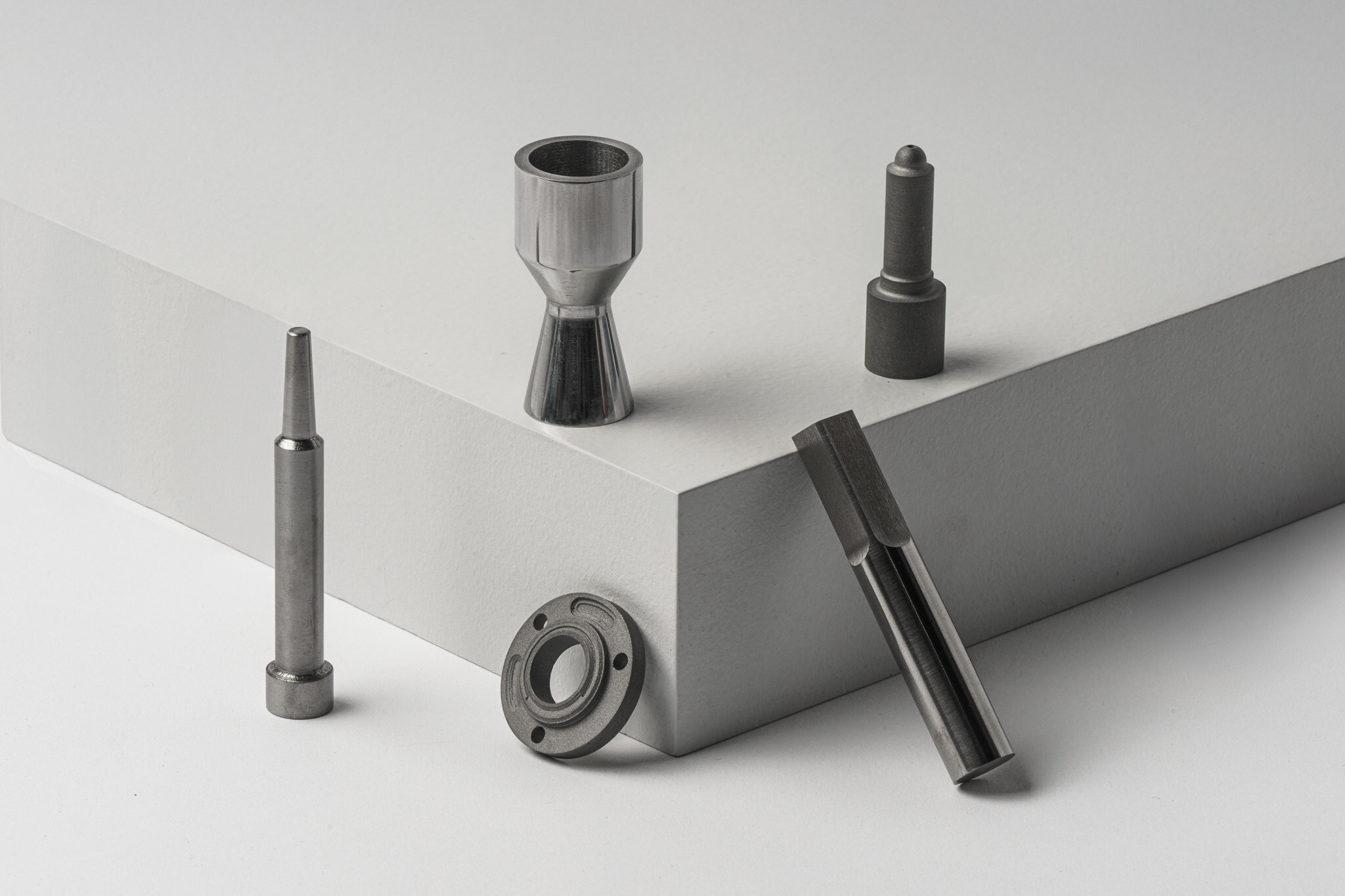
This morning, advanced metals manufacturing startup Foundation Alloy announced that it’s raised a $22M Series A to “scale production on its MetalsFIRST™ platform—a fully integrated, solid-state metallurgy technology—to industrial volumes.” The round was led by Voyager Ventures, with participation from Trust Ventures, Yamaha Motors, America’s Frontier Fund, Overlap Holdings, Material Impact, Engine Ventures, and El Cap.
The company has also scored an “additional investment” (amount undisclosed) from Japanese trading house Kanematsu Corporation and, through that, will bring its materials to “major industrial customers across Japan and Southeast Asia.”
Oh, and also, the company is opening a new 36,000-square-foot facility in Massachusetts and teaming up with manufacturing hotshot Re:Build Manufacturing to set up a “modular production cell” for metals in the company’s New Hampshire facility.
Sheesh. When it rains it pours, huh?
Metalheads: Now, strap in, because we’re about to (quite literally) break things down at a molecular level.
In case you don’t spend a lot of time thinking about where all the metal that makes your fun drone components comes from, here’s a bit of a refresher.
- Most of what is used in aerospace and defense are compound (or mixed) metals—otherwise known as alloys.
- Traditionally, alloys are made by melting down a base metal, then adding other metals to it.
- When we first spoke to Foundation Alloy founder and CEO Jake Guglin last year, he explained that while this might make the resulting metal stronger, the melting process can actually break down the microstructures of the component metals.
Unfortunately, that means that often alloys smelted (vocab word!) using traditional methods might not, for example, be able to withstand the heat produced by a hypersonic engine. Traditional alloying also uses a lot of energy—that’s expensive.
Break it down: Guglin and his co-founders—Jasper Lienhard and professors Chris Schuh, and Tim Rupert—founded Foundation Alloy back in 2022 to, well, forge a better path forward (forgive us).
- The company uses a zero-heat alloying method known as “mechanical alloying,” which basically forces metal particles to bind together physically (rather than using heat).
- The way they do this is basically using a machine that’s a lot like an industrial-scale rock tumbler or a giant KitchenAid. They put different metal powders in it, along with little metal balls they call media. As the machine whizzes around, the tiny metal balls smash the metals together, forcing the particles to bind.
- Last year, Guglin told Tectonic that said that when they look at the resulting compound metal particles, they’re completely homogeneous. The grains of the metal powder are also about 100x smaller than usual. In other words, they’ve managed to mix the metals on an atomic level without any heat.
- FWIW—this method is built on tactics developed in MIT and UC Irvine labs.
Over the last few years, Guglin and his team have built up quite the business around this mechanical alloying process.
- The team takes a two-track approach, Guglin said—they’ve got the product development/R&D side where they’re trying to develop better alloys, and then they’ve got the production side of things where they can churn out those metal alloys (and metal alloy components) at scale.
- That second track—production—is where a lot of this new funding will go. The idea, Guglin said, is to build up a “barrel” (metals production process) that can basically have any kind of “ammunition” (metal alloy) shot out of it.
- And they’re taking a very customer-centric approach—the idea, Guglin explained, is to work with customers to find specific pain points in the manufacturing process that their metals or tooling can help fix, create a viable product to fix it, then expand into new parts of the process. The point is to develop “standard products that these customers want,” he said, either on-site (like with Re:Build) or out of FA’s own facility.
- And if you’re wondering who, exactly, their customers are, Guglin couldn’t say, but did say they’re “working with a lot of major automotive OEMs that you have heard of, as well as several defense companies and aerospace companies.” Coy.
In-house: The new 36,000-square-foot facility sounds like it will be the embodiment of that half-R&D/product development, half-production approach.
- According to Guglin, the company is “pretty vertically integrated,” and they will be “inventing the alloys themselves and doing a lot of that product development work” in-house.
- But with this raise, they’re also majorly expanding the metal and part production side of things. “What’s coming into the factory is elemental raw materials, so think iron powder or nickel powder, and [what’s] leaving the factory will be metal components or near-finished components,” he said. “We’ll be running the entire chain in that facility.”
- The plan is to hire a bunch of engineers plus people who can run the production line—right now they’re at about 15, with plans to bump up to the “low-to-mid-20s” by the end of the year, and double again in 2027.
- Plus, they’ll be churning out materials for that East Asian expansion out of the US, too—the company was careful to emphasize that all of the materials will be created Stateside. In other words, the team will be busy.
“We’re seeing a lot of gaps in the supply chain as it stands right now in the metals and metal component side, and opportunities for us to step in on things like the drone stockpiling effort,” Guglin said. “We’re still just scratching the surface. We may not even be touching the surface yet of what we can accomplish over time. So, I think everybody’s really excited [about] this expansion.”