Just because Eurosatory is over certainly doesn’t mean our friends across the pond are slowing things down.
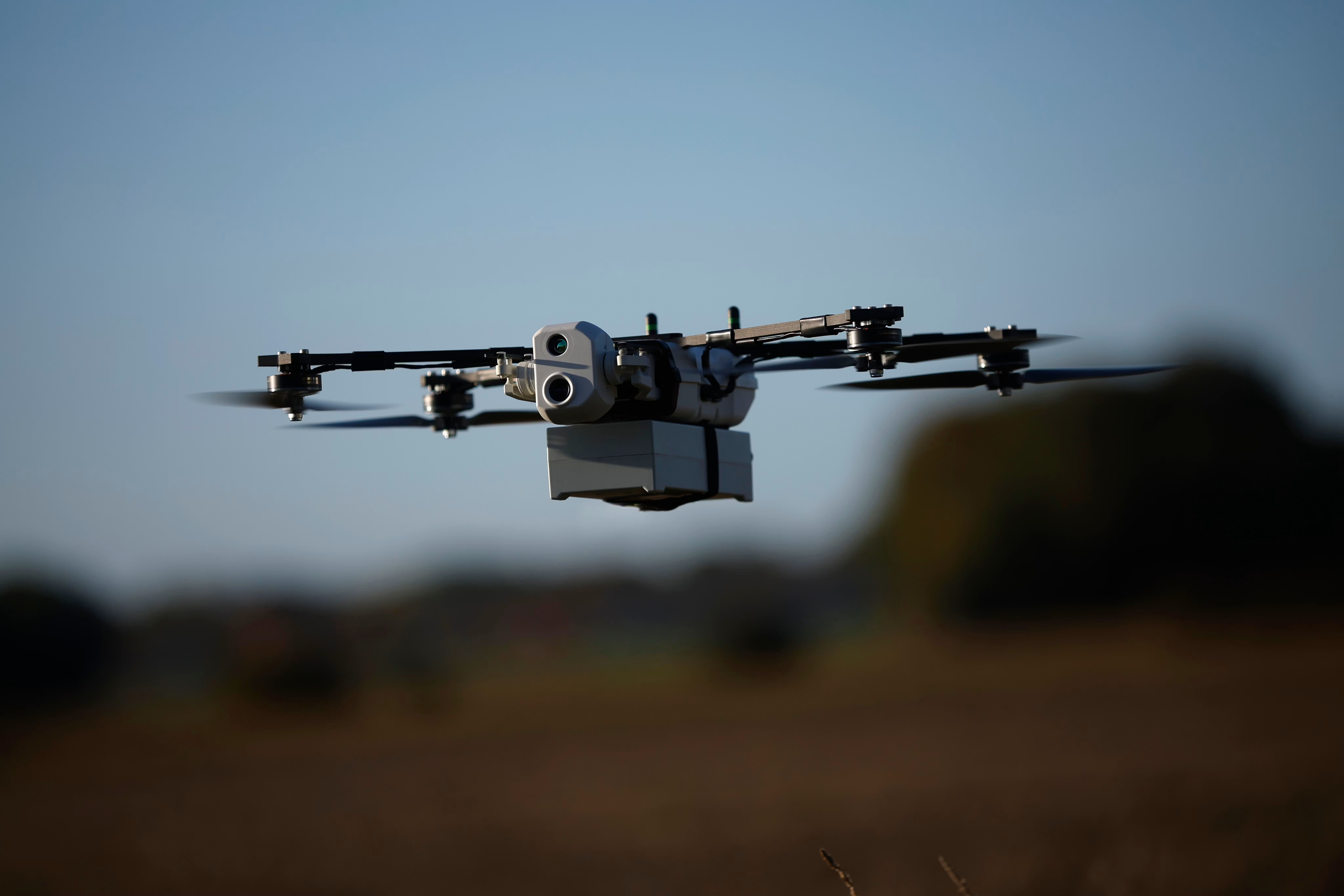
Yesterday, French autonomy startup Harmattan AI announced that the French government has ordered another 5,000 of its Sonora ISR drones, just a year after ordering a first tranche of 1,000. That first batch—part of a program of record with the French MoD—was delivered in less than six months.
“This is a quintupled order only six months after delivery [of the first 1,000 systems],” Harmattan CEO and co-founder Mouad M’Ghari told Tectonic. “This is testament to the quality of [our] systems and their usefulness for customers. It’s also…a very strong demonstration of the will of the French MoD to continue working with us on all of their unmanned autonomous platforms and systems.”
While Harmattan wasn’t able to reveal the value of the contract to Tectonic (government tings), that first order last year was a “multi-million-euro” contract. This one is five times bigger. You can do the back-of-the-napkin math.
Speedy quick: Harmattan has made some serious moves since it was set up just two years ago. Yes, M’Ghari only founded the company in April 2024.
- Since then, they’ve been put on “multiple Programs of Record by the French and UK Ministries of Defence,” according to the company.
- Last June, the French government placed that first order for ISR drones. Then, in September, they secured a “multi-million” dollar order from the UK MoD for 3,000 “autonomous systems.”
- Last week, the company also signed a “major strategic partnership” with the Kingdom of Morocco to help build up the country’s defense industrial base and deploy “next-generation autonomous air defense capabilities at scale.”
What have you accomplished in the last 24-ish months?
It’s a bird, it’s a plane: Harmattan’s primary tech is UAVs—but all built on the company’s own autonomy stack that is “engineered to interpret and act on data at the edge in real-time.” The idea is that Harmattan’s systems “operate without dependency on centralized infrastructure while ensuring human decision authority,” per the company.
Here’s what they’ve got, platform-wise:
- Gobi: A high-speed interceptor drone meant to target other small drones.
- Sonora: A cheap, mini quadcopter designed primarily for training and ISR. That’s what these French contracts are for.
- Sahara: A Synthetic Aperture Radar (SAR) system that the company has designed to be built onto Group 2 drones. The system corrects and refines SAR imagery onboard to (put simply) make images way better without external processing.
All of this operates on the company’s C2 system—Kalahari—which the company says has “embedded autonomy that enables intent-driven tasking, real-time decision support, and closed-loop execution across distributed unmanned systems.”
Cash money: And beyond those contacts, Harmattan has also been pretty dang successful, fundraising-wise.
- In January, the company closed a $200M Series B (huge for Europe) at a $1.4B valuation led by French defense giant Dassault Aviation. The two companies plan to build Harmattan’s autonomy stack onto Dassault’s larger platforms—like the Rafale jet and future unmanned fighters.
- Before the Dassault-led round, the company had raised $42M from investors, including Atlantic and FirstMark.
All of this has given the company some pretty insane momentum—and it sounds like the pace will only pick up with this new French order.
- M’Ghari told Tectonic that all 5,000 systems will be delivered by Q4 of this year.
- While the order is for ISR drones, they’ll also be able to play around with integrated sense-and-strike capabilities. M’Ghari says they’ve already got some strike systems deployed with French forces, so they will be “deploying ISR plus strike autonomy within this new batch.”
- They’ve also got more orders (and reorders) coming down the pipe that they’ll announce “in the coming months.”
“Clearly the French, [like] all of the other European and allied nations, want to modernize their militaries, but it is hard to do so,” M’Ghari said. “They are trying to do it on a constrained budget…but they are very aware that [autonomy] is the future of warfare, and they need to be prepared for it. This is a first small step towards modernizing their concepts of operations and their way to fight wars.”
No hands: On that note, it’s worth saying that M’Ghari is very bullish on autonomy. As Harmattan builds and delivers more systems, he said they are “going to remove the pilot from the loop.”
“We’re creating an end-to-end autonomous system and deploying it in order to be able to deploy full fire control and OODA loops with no pilots,” he said. “Operators only confirm targets…[this] will allow the human cognitive load to be drastically reduced [and] focused on what’s most important, which is mission definition and target confirmation.”
Rise of the robots, here we come.