You know the best thing about raising a $160M Series D? When you end up raising $275M.
This week, aviation autonomy startup Reliable Robotics tacked on an additional $115M to its Series D originally announced in April, bringing the California company’s total funding to a cool $380M and its valuation across the $1B mark. Defense tech world, we have our newest unicorn.
- OG Series D lead Nimble Partners returned to lead the latest round, alongside new backers Gideon Capital, RockCreek, Geek Ventures, Gold Hill Capital, Sparkwave Capital, and others.
As the company’s CEO Robert Rose told Tectonic, “It’s good to have more money in the bank,” and that fresh cash money will help drive Reliable’s push for FAA authorization across the finish line and fund the expansion of its aircraft fleet and engineering team.
Ol’ Reliable: It’s getting hard to keep track of all the companies promising to drone-ify planes, but Reliable Robotics is taking the path of least resistance, going all-in on a proven aircraft instead of building its own and developing the autonomy hand-in-hand with the FAA to secure certification for unmanned flight. Live by the law, die by the law—especially in an industry as regulated as aviation.
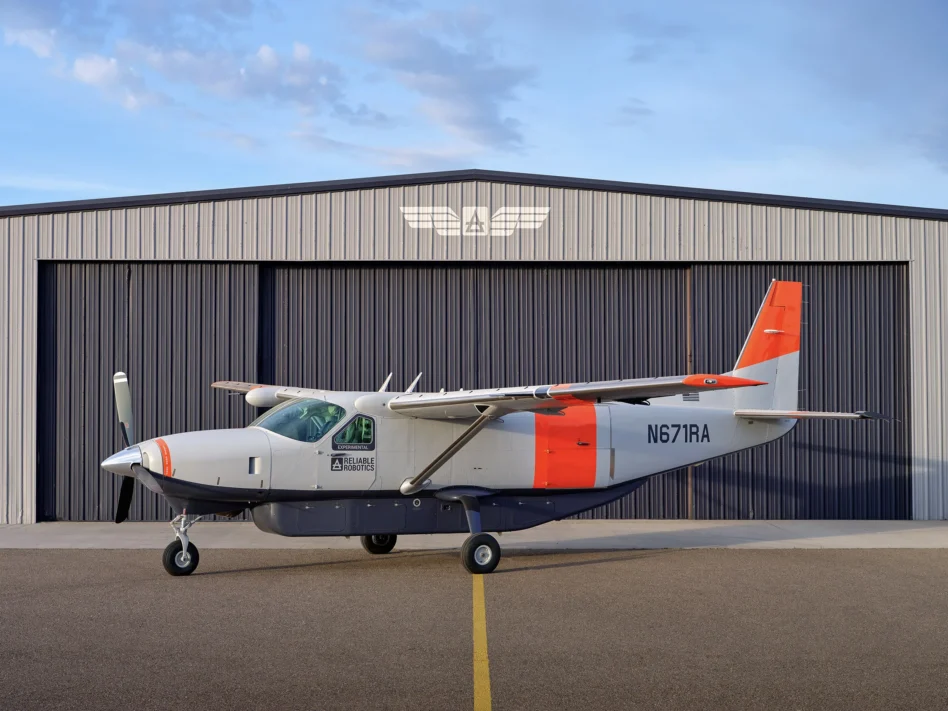
- Reliable’s hardware and software autonomy stack, creatively called the Reliable Autonomy System (RAS), is designed to work on any aircraft, but the company has gone all-in on turning the Cessna 208B Caravan into an autonomously piloted cargo hauler for the US military and commercial customers.
- RAS supports both optionally piloted (where the pilot is present but doesn’t need to touch buttons during taxiing, takeoff, and landing unless disaster strikes) and fully remote (no pilot) flight.
- Rose says they’re closing in on certification for the former, with the latter (understandably) demanding a lot more rigorous testing and validation, but the “FAA has accepted all of the plans and procedures for how the system will be certified.” According to Reliable, they’re the only one out there with that level of approval.
“There’s a lot of very low-level software testing that needs to be performed—making sure that every single line of code is exercised correctly and traceable back to a requirement,” he said. “For hardware systems, there’s a tremendous amount of environmental testing that needs to happen, like for shock, vibration, temperature, humidity, and even electromagnetic interference.”
- He estimates that they’ll have their end-to-end autopilot fully certified within the next 18 to 24 months, and the fully uncrewed certification, a parallel effort to the first, within three years.
- After securing the initial stamp of approval, they’ll kick off commercial operations with the system, but “in advance of that, some of these military programs that we’re pursuing…will install this into military-destined aircraft in a pre-certified configuration.”
- According to the company, they’ve got commitments for “over 200 systems from commercial and military customers.” Most of those are in the commercial sector, but they’ve won contracts with AFWERX—including a $17.4M one last year—and with other undisclosed military customers for the remotely piloted Caravan.
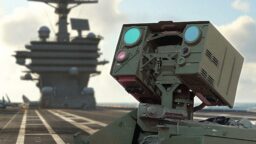
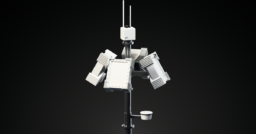
Bringing it in-house: Alongside the Caravan, Reliable is also developing (and in the certification process for) a collision-avoidance radar, which they’re testing and “utilizing several different aircraft because we want it to be easily transferable to other aircraft types,” Rose said. That’s been flight-tested on the Caravan and one other aircraft.
The radar was initially designed for the military and FAA collision-avoidance requirements, but they’ve found it’s shaping up to become a standalone product line.
“The solid-state nature of the radar has some advantages over traditional gimballed radars that have moving parts, mainly that we can scan the sky thousands of times faster than existing moving-part radars,” Rose said. “One thing that we did not anticipate when we started the radar project was that there’s actually a tremendous amount of interest [in this] from the aviation industry, both commercial and the military.”
- He added that they’ve secured military contracts for this, and Boeing and RTX Ventures both invested in the company primarily because of the radar technology.
Dare we say aviation is truly on the verge of going “Look ma, no hands”?