If y’all thought the drone craze was dying down, think again.
In the past 24 hours, German defense tech darling STARK unveiled not one but two new drones—Cascade and Gambit—at ILA Berlin.
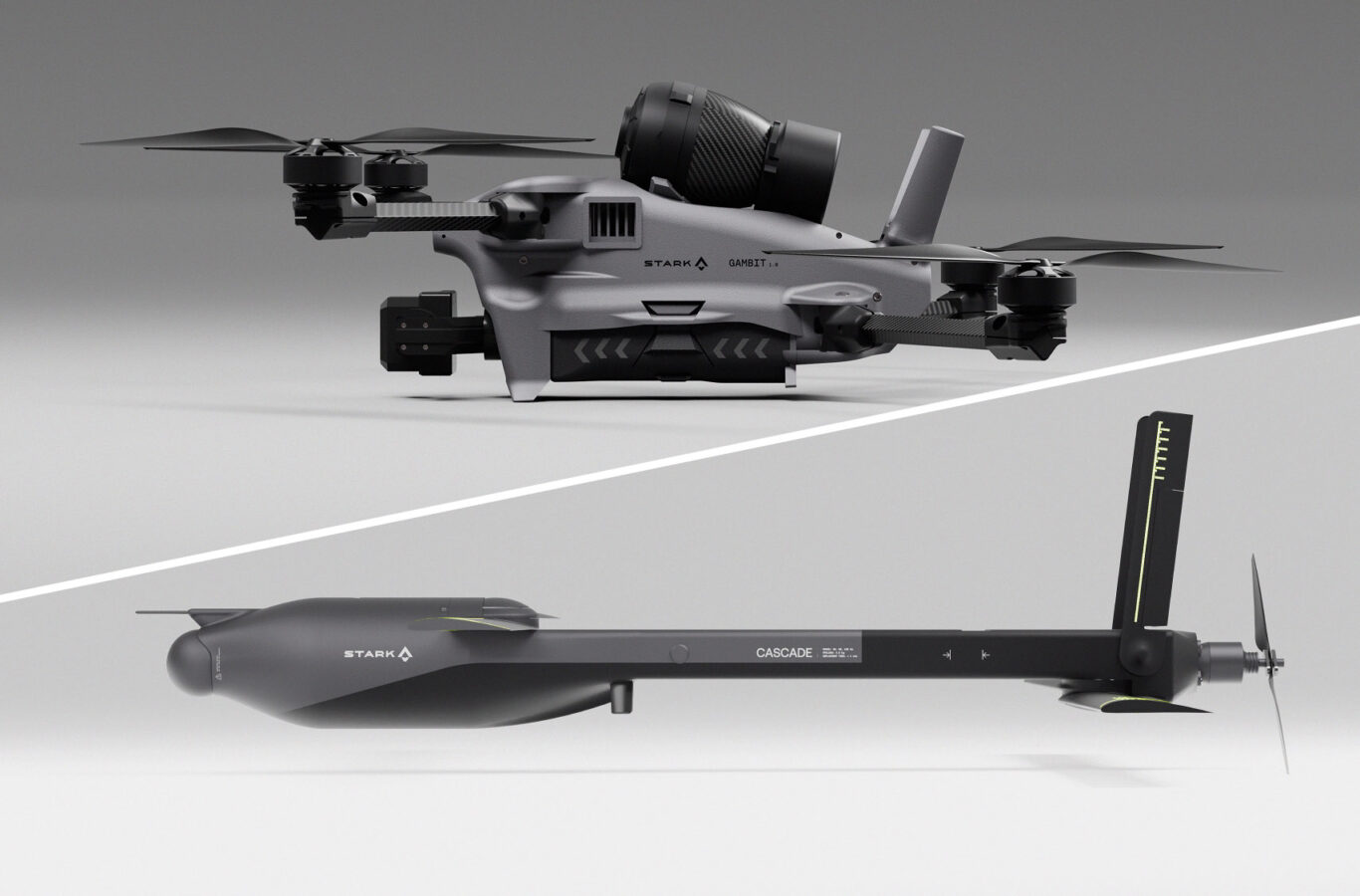
Gambit is a man-portable quadcopter designed for ISR and short-range strikes, while Cascade is a tube-launched loitering munition (also man-portable) with a range of up to 100km. Cascade is designed to be “deployed from canister and container launchers on land and at sea, enabling operators to launch multiple effectors at once,” per the company.
The company is also teaming up with UK engineering company Force Development Services to build a six-cell launcher that will make deploying those Cascade swarms real easy.
Damn. Big week for the defense tech baddies across the Atlantic.
Alles gut: We’ve covered Stark a bunch before, so we’ll keep this brief.
The company was founded back in 2024 by Quantum Systems CEO Florian Seibel, but he’s stepped back from day-to-day operations since. Now, the company is run by Uwe Horstmann, co-founder of VC fund Project A.
On the whole money side of things, the company has been, uh, pretty darn successful.
- Last summer, the company raised a cool $62M round led by Sequoia Capital with participation from heavy hitters including 8VC, Thiel Capital, the NATO Innovation Fund, In-Q-Tel, Project A, and Döpfner Capital.
- According to reporting by the FT, the company is raising “at least” €300M ($347M) at a €2.5B ($2.9B) valuation. The company was valued at more than €1B in an undisclosed funding round earlier this year.
And they’ve put that cash money to pretty good use on the whole drones-made-in-Europe thing.
Here’s what they’ve made to date:
- Virtus: The company’s flagship VTOL one-way attack drone that can carry a 5kg (11lb) payload and dive at up to 250 kph (155 mph) with a 100km (62 mi) range.
- Minerva: The company’s bespoke Command and Weapons Control (CWC) system, which allows operators to swarm Stark drones.
- Last year, the company also branched into the ever-so-sexy maritime domain with a USV it calls Vanta which will reportedly be equipped with anti-drone pew-pew lasers.
All the way up: Plus, despite being a relatively new entrant on the defense tech scene, the company has made some major inroads in Germany and across Europe.
- The German government awarded the company (along with Helsing and Rheinmetall) a nearly €300M contract for those Virtus strike drones. Stark says the agreement was for “several thousand loitering munition systems within two years following successful qualification.”
- The company has also been making inroads in the UK—they opened a factory in Swindon late last year, are pushing to supply drones to the MoD, and are producing those Vanta USVs in-country. Prime Minister Keir Starmer also paid a visit to the Swindon facility late last week.
Cascade and Gambit mark a pretty massive expansion in Stark’s drone offerings.
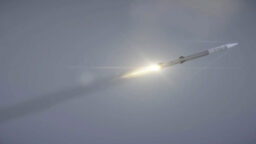
Cascade looks a lot like a mini-missile with foldable wings.
- It has ranges of 40, 60, or 100km, depending on battery configuration.
- It can carry payloads of up to 4.5 kg with a dive speed or 220 km/h and a flight time of 60 minutes.
- It’s designed to be super easy to deploy—the drone’s tube launcher can be set up in “under a minute” per the company, with little infrastructure required.
- It’s also lightweight—launcher and effector come in at under 20kg—and more than ten of these bad boys can fit on a single vehicle.
- The company says Cascade has a software-defined architecture that enables over-the-air (OTA) updates.
- It’s also designed to operate in GPS/GNSS-denied environments and some nifty AI and sensor fusion enable navigation, object recognition, precise tracking, and precision strikes.
Gambit has more of a chunky quadcopter look going on.
- The drone is smaller and designed for shorter-range strike and ISR.
- It’s got a 25 km range, weighs about six kilograms, and can carry a payload of up to two kilograms.
- It’s got a cruise speed of about 60 km/h, a dive speed of about 120 km/h, and is (like Cascade) designed to be ultra-portable.
- STARK says the drone is equipped with electro-optical and infrared cameras that ensure it’s effective both day and night, and that high-resolution optics enable GNSS-denied visual navigation.
- Gambit also has an optional fiber-optic link for when things are particularly jammed. The whole thing is designed to be “carried by frontline operators and used in GNSS-denied environments,” per the company.
Both systems plug into Minerva, which enables them to be “used alongside other systems in coordinated swarm and recce-strike operations.”
Looks like the rise of the robots ain’t over quite yet.