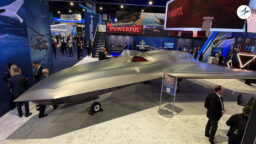
Hot off a $300M Series C at a nearly $2B valuation and a $50M acquisition of propulsion system and solid rocket motor-maker Exquadrum, Mach Industries is already making moves to roll out more boomy and zoomy tech.
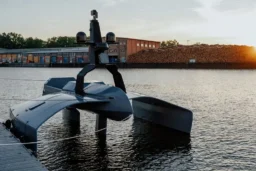
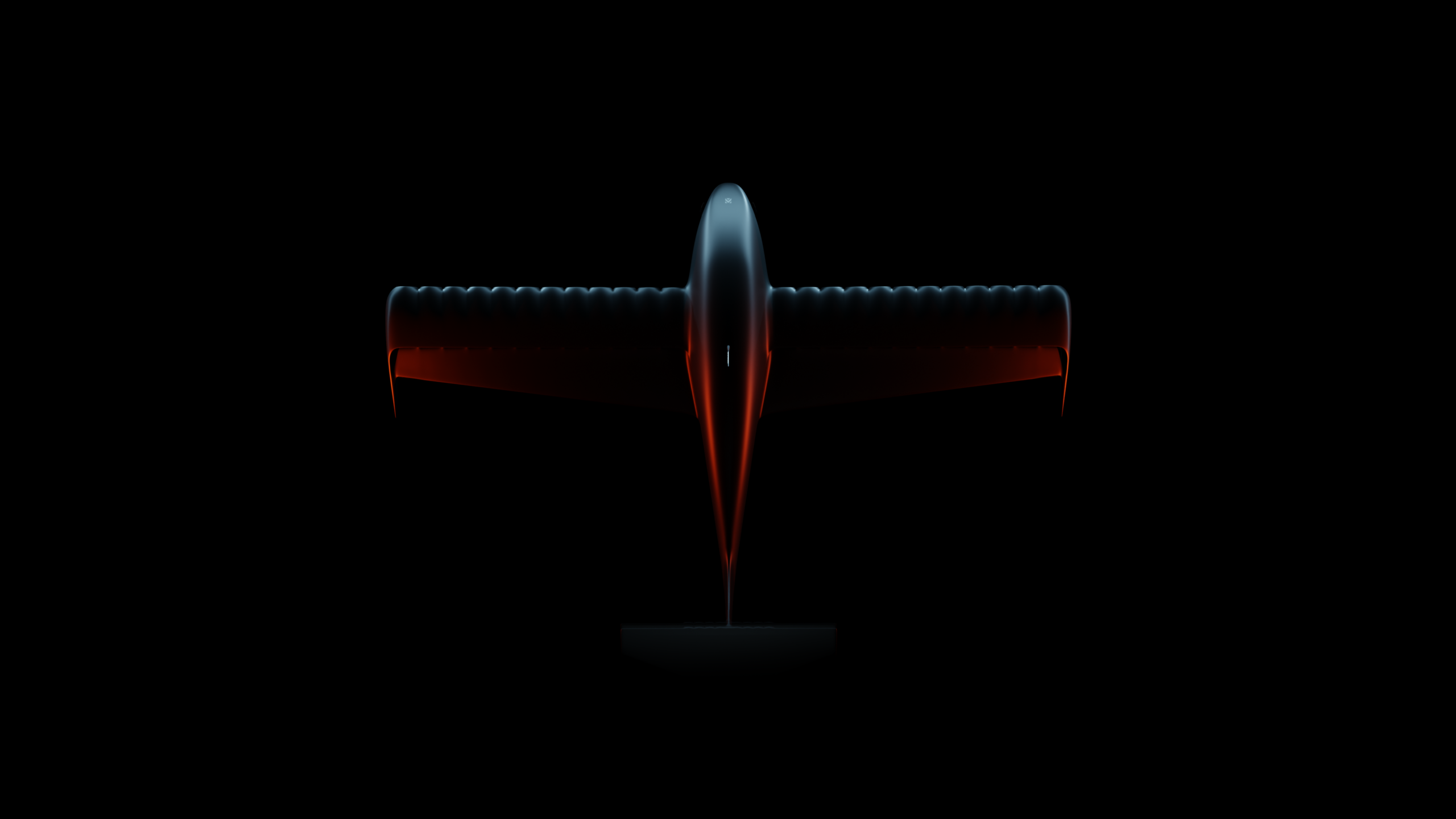
The California-based startup announced this morning that it won a contract for the DIU’s Runway Independent Maritime & Expeditionary Strike (RIMES) program to develop a new aircraft for the Navy called Atlas, a big ol’ drone built with Whisper Aero and capable of delivering fighter-sized munitions across hundreds of miles with minimal launch infrastructure.
Mach is serving as the aircraft integrator on the contract and is teaming up with Whisper Aero to integrate the engine maker’s ultra-efficient electric propulsion system into Atlas, extending the range and making it super quiet. The company couldn’t disclose the value of the contract.
Rhymes with RIMES: RIMES—launched by the DIU in February—is designed to give the Navy a long-range strike capability from platforms and places that can’t support fighter jets. The solicitation called for a UAS that:
- Can operate without runways in “expeditionary locations” or large flight decks from vessels like Arleigh Burke-class destroyers, Littoral Combat Ships (LCS), and the Navy’s future FF(X) frigate based on the Coast Guard’s Legend-class cutter. Those can all launch helicopters, but not jets.
- Has a one-way range of 1,400 nautical miles and can carry the 1,000-pound standard munitions that F/A-18 Super Hornet and F-35 fighter jets already deliver.
- Has mission autonomy and the ability to operate in contested environments, an open systems architecture, and is “cost-effective.”
“Long-range, anti-ship weapons present a growing threat to US Navy ships and degrade their ability to accomplish a mission,” the DIU’s solicitation said. “While access to long-range strike methods can mitigate this threat, naval surface combatants are constrained in their ability to support long-range strikes over extended combat operations due to reliance on single-use missile systems, with limited magazine depth and limited at-sea munition replenishment capability.”
Go long: The DIU is betting that Mach’s new aircraft, Atlas, is just what the Navy needs to solve that problem.
The aircraft meets all the specs in the solicitation and has an “over 6,000-pound gross takeoff weight with a 40-ish foot wingspan, so it’s a large aircraft,” Mach’s President and Chief Strategy Officer Nathan Diller told Tectonic.
- That’s a big jump in size from what Mach currently has in its product portfolio, which includes a turbojet-powered vertical takeoff one-way attack UAS called Viper, a low-cost kinetic drone interceptor called Dart, a small plane-like drone called Pike, and a high-altitude glider called Glide.
Silent but deadly: Atlas, more importantly, is built around Whisper Aero’s novel hybrid-electric JetFoil propulsion system that “blows the air mass at a very high speed in a very, very low turbulent manner, so you get high efficiencies and, because of the configuration of the propulsor, you get incredible acoustics with a very low signature,” Diller said.
Mach is also partnering with other companies on Atlas, but isn’t announcing them just yet.
Step by step: The contract for Atlas is structured in phases. The first stage covers the “tech diligence around safety, reliability, and, in this case, the novel propulsion,” he added, and the contract is written so the DIU “can quickly roll into other tranches of funding.” Mach is aiming to fly a small-scale prototype of Atlas this year and a full-scale one next year.
- Diller said that Mach’s prototype is at around Technology Readiness Level 4 and that they might look to commercialize the subscale version as a standalone product once it’s tested and validated.
“[The DIU] has done a great job with incredible speed to contract, and then a very structured phase-by-phase approach that allows the government to quickly gain trust, industry to prove that trust to be able to go to the next phase,” he added. “We want to prove out that this is not a prototype, even on the subscale, and we’ll go directly into manufacturing.”