Aside from all the controlling-your-own-supply-chain stuff, one of the underrated benefits of building a vertically integrated company is that pretty much every component you build is a new product to sell.
At least that’s what Aeon’s found.
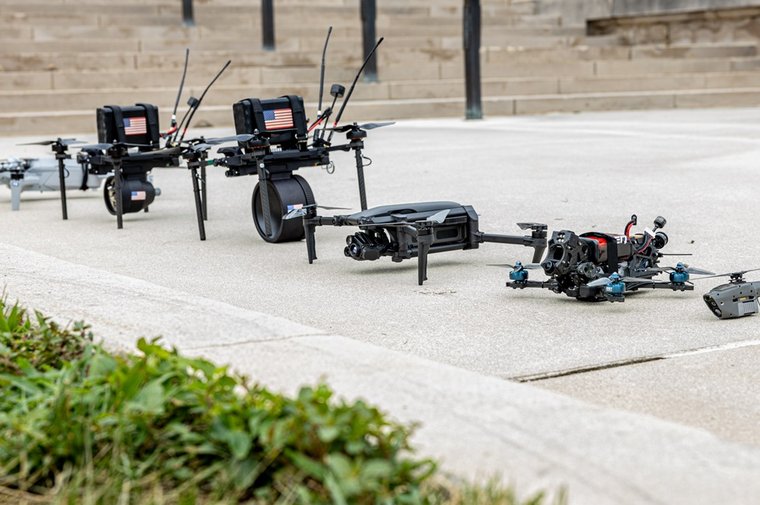
The Austin-based software-defined missile startup built its own fuzes and electronic safe and arm devices (ESADs)—the things that control whether, when, and under what conditions a bomb goes boom—for its flagship Zeus missile to save on cost, but they’re now set to supply almost half of the one-way attack drones in the second phase of the Drone Dominance Program with a scaled-down version, the company exclusively told Tectonic.
- Aeon’s providing the drone fuzes and ESADs to drone-makers Red Cat, Skyfall (or Skycutter), and other undisclosed competitors in the Drone Dominance Program. In the few weeks since developing the smaller fuzes, Aeon’s already delivered over 1,000 units.
- Skycutter, the collab between Ukrainian drone giant Skyfall and a UK company, placed first in the Drone Dominance Program’s first gauntlet.
- The ESAD Aeon built is also designed to fit the configuration Neros uses, but couldn’t confirm Neros (or other companies) as a buyer.
Doing it all: When Aeon first set out to develop its Zeus missile, they planned to buy fuzes, ESADs, and other components off the shelf, but quickly realized that the market for these parts was super consolidated, lead times were too long, and units were way too expensive. So, like any good startup with gumption, they built their own instead.
- “We started building everything in-house, from propellants to fuzes to sensors. That’s how we ended up where we’re at now with the ESADs,” Aeon’s Director of Growth Christopher “Gus” Jennings told Tectonic.
- “It spawned out of necessity and a lack of desire to offer Zeus at $10,000 more per missile. We were just trying to chop away at that supply chain,” Aeon Chief Growth Officer Wes Shover added.
Controlled detonation: When the Drone Dominance Program kicked off, and companies started looking for cheap fuzes for their go-boom payloads, there weren’t a whole lot of options, especially for the high-voltage fuzes typically only required for high-end weapon systems, but now also for sensitive, man-portable munitions like strike drones that can’t risk premature detonations.
“Long story short, we get into Drone Dominance, and the military starts looking for high-voltage solutions. People reached out and asked, ‘You built low-cost fuzes for the missile—can you do something similar for drones?’” Jennings said. “We started having [conceptual] discussions in May. By June, we had people going, ‘Would you please build this?’ and then by July, we built it, scaled it into production, and had units going out the door.”
Boom on a budget: The solution Aeon whipped up in a matter of weeks is pretty much the fuze and ESAD used in Zeus, but scaled down for the kinetic payload on drones. For Aeon, that made the R&D process super speedy, and for the customers looking to keep costs low (a requirement for the DDP), the startup says there’s nothing else on the market that beats them on price and volume.
“We’re about 25 percent the cost of the fuzes that we’re replacing…and we’re going to be on about 40 percent or more of all the drones and payloads at Drone Dominance,” Jennings said. “We’ve delivered over 1,000 already across multiple customers, and that’s just in the few weeks that we’ve been offering these fuzes. We’ll be ramping up further than that in order to support the demand.”
- In other words: they’ve already booked millions in orders—from some of the top drone-makers in the game—for a product that didn’t exist a month ago.
“Because of the cost point we’re at and the safety standard we meet, I honestly think it’s going to be difficult for anyone to compete with what we’re offering in the next several months,” Shover added. “If you look at what [the Drone Dominance Program] wants to do, I think it’s like 100,000 units. Okay, well, we could probably do that in one year pretty easily.”
- That might not be an exaggeration—the DDP is placing orders for 60,000 drones from the top-performing companies after the conclusion of Gauntlet II and over 200,000 by next year.
Since Aeon’s built everything in-house, all of the other components in Zeus, like the fuzes, are potential additional lines of business. “We’re a missile company by nature, but the fact that we are vertically integrated has really opened a lot of doors for us,” Jennings said.
“There are many components of our missile system that we have no problem selling to other customers, even to competitors,” he added. “We’re here to revitalize the industrial complex to provide these systems at an achievable cost to the warfighters, so when it comes to fuzes, propellant, rocket motors, or any other component we build, we’ll supply them to anybody that needs them.”