Saronic may be near-synonymous with futuristic drone boats, but the US Navy sees something different: A shipbuilder with rapidly expanding capacity, a growing workforce, and a solid balance sheet.
There aren’t many others.
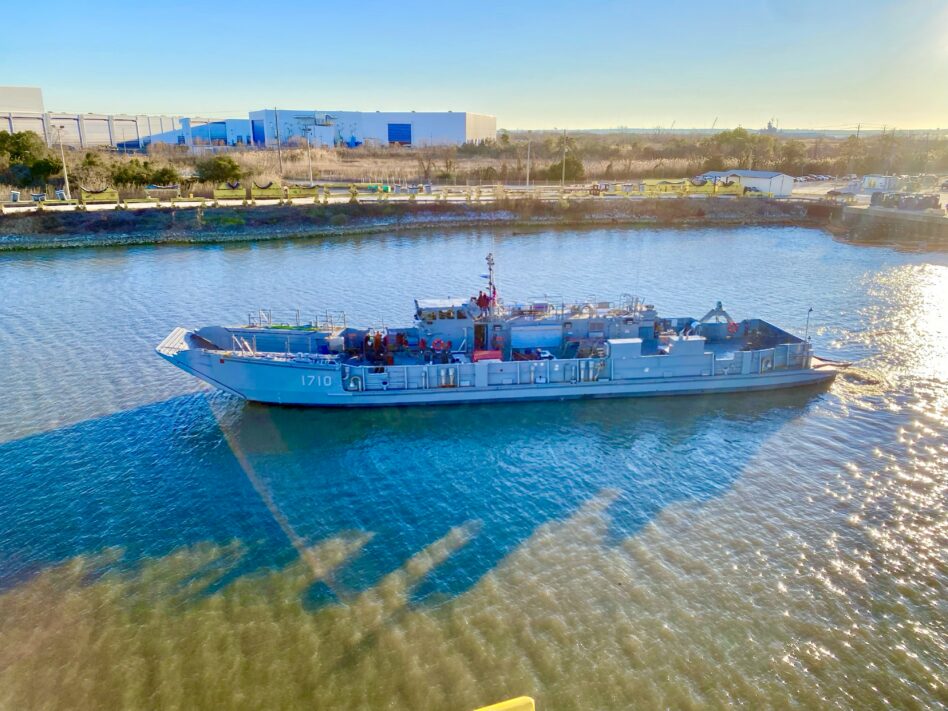
Yesterday, the Navy awarded the autonomous surface vessel (ASV) hotshot, alongside legacy shipbuilders Conrad Shipyard of Texas and Master Boat Builders of Alabama, OTA contracts totaling $280.5M to each build several different prototypes of the service’s next Landing Craft, Utility (LCU) ship-to-shore logistics vessel at their respective shipyards.
In Saronic’s case, that’s their newly announced Port Alpha shipyard in Brownsville, TX, which will have 150,000 gross tons of shipbuilding capacity (at least to start). The LCU 1700 will be the first build there and, to be clear, it’ll be manned.
- For context, the LCU 1700 is the Navy’s new heavy-lift landing craft, designed to move troops, vehicles, weapons, and cargo between amphibious assault ships and shore. It’s replacing the aging LCU 1610 class, which average 50 years of service.
Shipbuilding capacity is shipbuilding capacity, after all, and the Navy will take it where it can get it.
Old and new: Saronic’s Port Alpha shipyard, unlike its Franklin, LA, shipyard, where it’s building its 180-foot Marauder ASV, will be set up to produce both defense and commercial, manned and unmanned vessels once it’s fully operational in 2028.
Manned ships are new territory for Saronic, but CEO Dino Mavrookas told Tectonic earlier this year that they’ll “incorporate all of the technology that we’re building to make [them] more efficient and then de-man them as we move into the future.”
The contract is also part of Saronic’s plan to play on both sides of the ball as the Navy builds out its hybrid fleet.
“Port Alpha is designed to produce large autonomous surface vessels alongside currently manned ships, supporting the Navy’s hybrid fleet strategy while adding surge capacity to the broader US maritime industrial base,” Mavrookas said in a statement. “Saronic is helping address the critical backlog facing America’s shipyards with one of Port Alpha’s first builds.”
- Saronic says they’re expecting to kick off LCU production in 2028, with the first deliveries starting in 2029.
- In total, each shipyard will “construct two or three” prototypes of the craft.
Now, this isn’t all “out with the new, in with the old.” Saronic is betting that a little new-age startup speed—“pairing a new production facility with a manufacturing approach built for repeatable, software defined ship construction,” the company said—will help shake up the sclerotic maritime industrial base.
The Navy is, too.
“By selecting three distinct shipyards, the Navy is expanding its shipbuilding industrial base capacity and building a resilient ‘second source’ of supply for landing craft,” the Navy’s acting Assistant Secretary of the Navy for Research, Development and Acquisition, William Mahan, said.
Warning shot: The contracts to Saronic, Conrad, and Master Boat Builders are also a shot across the bow (pun intended) to Austal USA, the American subsidiary of Australian shipbuilding giant Austal, which was tapped for the LCU 1700 and delivered the first vessel in August.
To put it mildly, Austal’s had a rough go of it. The shipbuilder, which has an order book nearing $12B, is on the brink of either failure or a sale to either South Korea’s Hanwha (which offered $1.2B) or to US-based Wildcat Infrastructure (which offered $1.25B) after taking serious losses on underbid contracts.
After taking delivery of the first LCU, the Navy is looking to hedge its bets in case things go south for Austal by tapping the three other shipbuilders to create a “resilient, multi-source industrial base…across three shipyards” for the vessel.
By bringing Saronic into the mix, the Navy is testing the waters to see just how much a go-fast startup could shake things up in an industry that’s become anything but.