With the Drone Dominance Program’s Gauntlet II winners announced last month, it was only a matter of time before the big orders started piling up.
Yesterday, Orqa US, the American subsidiary of Croatian drone giant Orqa FPV, and XTEND revealed they’ve won $38M and $40.5M contracts, respectively, after strong showings in the second round of the Pentagon’s signature $1B drone testing and procurement initiative.
- The DDP’s Gauntlet II was split between two tracks: Close Quarter Battle (urban/confined environments) and Deep Strike (defined as up to 20 km).
- Orqa placed second in the CQB evaluation, earning the company a 7,000-drone order, while XTEND placed third, scoring an order for 6,000.
Drone dollars: They’re not alone in scoring some big wins in the program. The DDP is ordering 60,000 small FPV drones from the top five companies in each Gauntlet 2 category, meaning there’s a whole lot of drone dollars heading to these drone hotshots.
- That includes a $100M order of 14,000 from Neros—first reported by Tectonic—after placing third in the Deep Strike category and first in the Close Quarters Battle one, and a $25M, 5,000-drone order from Swarm Defense.
- The other companies that made the cut—Deep Strike category winner Perennial Autonomy (8,000 drones ordered), Hyperscale (7,000), Skycutter (5,000), Vector (5,000), and ModalAI (4,000)—also landed big deals, but haven’t disclosed contract values yet.
Whale watching: Orqa US, launched in May through a partnership with defense contractor By Light, might be a new name on this side of the pond, but the company ain’t no newcomer on the drone scene.
The company (as in, the parent company) was founded way, way back in the before times of 2018 and has made a name for itself building FPVs (and their components) that have been a hit on the battlefield in Ukraine.
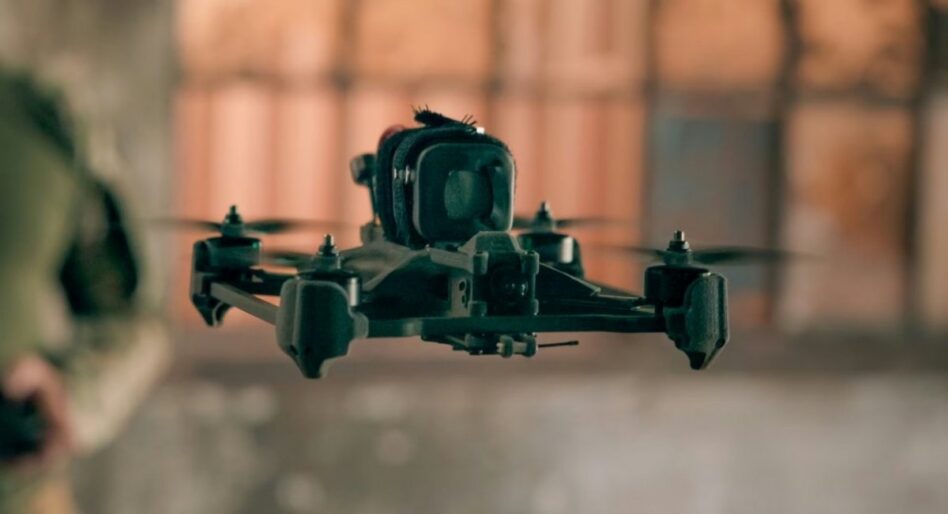
Orqa makes a few different FPVs:
- The MRM1-5 training drone, the NDAA-compliant and EW-resilient MRM2-10, and the more commercially marketed Dream X. The US subsidiary of the company is delivering an 8-inch MRM2 indoor drone under its $38M DDP order, along with its ground control system.
- They also make all the kit that makes those drones go zoom in-house: Goggles, flight controllers, motors, printed circuit boards (PCBs), cameras, radios, and all the mechanical drone parts. Big emphasis on the no-Chinese-parts thing here.
And they’re not slouching when it comes to churning these out—late last year, the parent company said it had the capacity to produce 280,000 drones a year. Under the manufacturing partnership with By Light, Orqa is producing drones for the DDP in By Light’s 180,000-square-foot facility in Florida.
For XTEND’s part, they’re delivering 6,000 of their STRIKER tactical drones, designed for close-quarters and GNSS-denied environments.
- The Israeli-born, Florida-based company is also no newbie in the drone game. XTEND says it has produced and deployed over 12,500 systems across more than 30 countries, including “5 active combat zones.”
- Along with a range of ISR, strike, and close-quarter/indoor drones, XTEND’s XOS software combines AI-powered autonomy with human decision-making and can run across multiple air, ground, and maritime platforms.
Rising to the challenge: The second phase of the DDP was the “most demanding test to date,” but the companies “rose to the challenge with improved capabilities,” according to the DIU, which is running the competition. “Each of the 11 platforms evaluated at long distance made it to 15 km. (In Gauntlet 1, only 24% of drones managed to reach 10 km).”
The evaluations will only get more demanding in Gauntlet III, and companies—especially Neros, which has scored a total of 2,800 in bonus orders after some lightning-fast deliveries—have proven they can pump ‘em out quickly so far, but the real challenge that the DDP is finding comes down to the operators flying them.
The DDP has “absolutely enough [drones] to get them down to every squad level” through the initiative, the program’s director, Army Col. Gregory Merkl, told reporters last month, but “where we still have some work to do, candidly, is getting everybody trained at the appropriate level.”
Wonder where they might find people with a lot of drone-flying experience to help ’em out on that front.