Remember the olden days when companies emerged from stealth with, like, $5M in funding and a dream?
Yeah. It would appear those days are long gone.
Earlier this week, manufacturing software startup Arda emerged from stealth with $232M in total funding and a pretty flashy first customer: Anduril.
- The company was founded by former OpenAI Chief Research Officer Bob McGrew, who probably knows a thing or two about AI.
- Arda’s most recent raise is a $160M Series A at a $1.5B valuation, co-led by Altimeter, Accel, and Khosla Ventures, with participation from XYZ Venture Capital, 8VC, SVAngel, and Felicis.
- Prior to that, the company raised a $72M seed (yes, seed) led by Accel and Founders Fund.
Design within reach: Arda’s company’s flagship software “helps manufacturers quickly turn new product designs into working assembly lines,” basically turning CAD files into instructions for assembly, even as designs are rapidly updated.
- The software is already deployed as part of ArsenalOS—Anduril’s manufacturing stack. Fun fact: Anduril was already using the company’s smart-assembly AI agent before Arda was even incorporated.
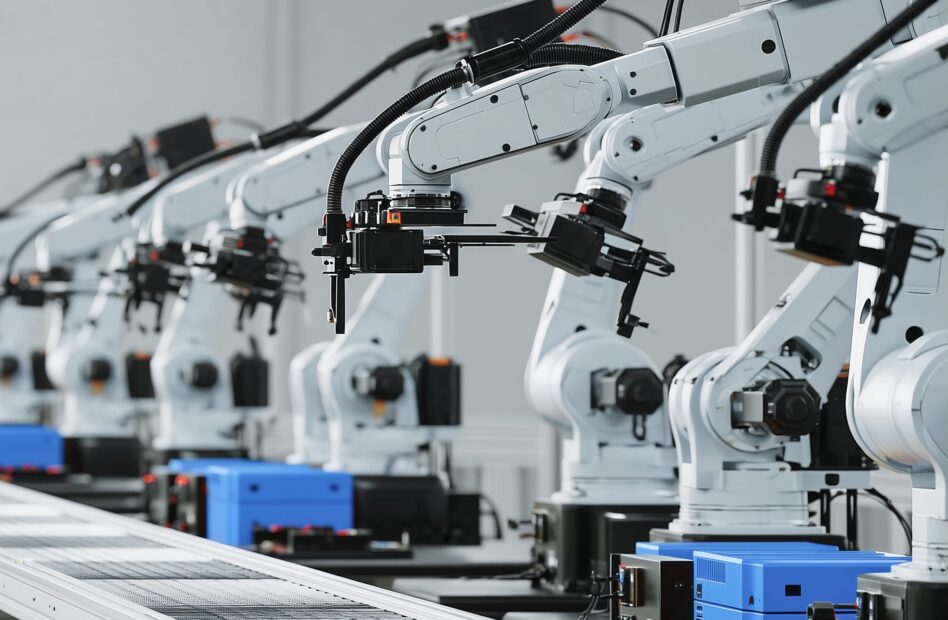
Arda describes its software as the “first step towards a larger vision: Automated robotic assembly lines that update as designs change.” They’re gonna use this new pile o’ cash money to get closer to that robotic manufacturing future.
“I kept asking: why can we design the next generation of products in America, but not build them here? When a product changes every year, the factory has to be able to change with it,” Arda Founder and CEO Bob McGrew said in a statement. “Manufacturing leaders told me their products change constantly, and manufacturing engineering can’t keep pace. Their designs change at software speed, but their factories don’t. So, we built the technology platform that solves this problem.”
“Imagine a fully automated version of Shenzhen in West Texas,” he added. “That’s what we want to make possible.”
Rise of the robots, indeed.
Speedrun: Now, we love to talk about iteration and speed and manufacturing at scale. But making sure that factories can keep up with the speed of kit change required for modern warfare is, like, pretty dang difficult.
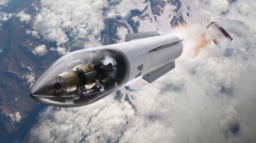
- Let’s say that Anduril designs a new interceptor. The company’s engineers have all of the technical drawings, components and specifications needed to build it. But that doesn’t mean that Arsenal One can immediately start churning that interceptor out. (Let’s call the interceptor Pathwalker, just for fun. If anyone doesn’t get the joke, let us know.)
- The issue is, Pathwalker has a whole new set of sensors and a jet engine, and needs to be assembled in a different sequence than its predecessors. It also needs a couple of new tools.
- Rather than asking a foreman of some variety to rejigger the production line for Pathwalker production, Arda’s AI agent does this automatically. It takes all those computer-aided design (CAD) files and other technical bits and bobs and turns it into manufacturing instructions.
Software update available: And, here’s the really key part—it can keep updating those instructions as Pathwalker (our theoretical interceptor) gets updated. After all, engines and sensors in modern conflict need to be updated, like, every few weeks (generously).
- Per the company, traditional methods for coding a single automated assembly station “can take three to six months and cost close to $1 million…. by the time an automated line is ready, the product has moved on.”
- The funny thing is, humans, at least in this case, are actually faster—a human can learn new instructions in a day or so. The goal here is actually to bring machines up to human speed.
And it sounds like, at least at Anduril, Arda’s software actually works.
According to the company, their software turned “days of work into hours, and hours of work into minutes.”
- When deployed as part of ArsenalOS, “basic work instructions that once took 10 hours can now be created in 15 minutes, while more complex engineering workflows that previously took up to 30 hours now take roughly 2.5 hours.”
“Our manufacturing engineers are doing two hard things at once. They’re keeping up with design teams that iterate constantly, and they’re scaling production to meet demand,” Anduril Co-founder and COO Matt Grimm said in a statement. “Arda helps them get design changes onto the floor faster and catch potential issues sooner. We would be behind on our production goals without it.”
Wild robot: Now, the company—like many in the year 2026—is planning to go full I, Robot.
- Arda is already prototyping a setup where it “uses AI agents to program robots to carry out its assembly plans, station by station,” that is able to update super-duper quick.
- The idea is to “make robotic assembly lines as quick to adapt to new designs as an assembly line staffed by people today.”
- This funding will go towards building out the design and engineering teams necessary to do that, develop the robotic models needed for automated assembly, and support the company in expanding into industries including “defense, electronics, [and] the data center supply chain.”