As any reader of this newsletter knows, a seemingly endless number of new technologies are flooding the defense tech scene, all promising game-changing capability and unmatched performance.
That breakneck pace is supported by some big-name companies building fancy software and hardware testing tools for the new wave of defense companies, from internal test data collection and analysis (like Nominal) to simulated environments (like Applied Intuition).
For the folks responsible for evaluating and ultimately fielding those technologies, there’s a whole lot less on offer to help figure out what actually works and in what conditions, how performance changes based on different variables, and how to do all that at the speed of iteration.
Enter Valkryn.
The DC-based startup, led by Applied Intuition, Anduril, SpaceX, and Palantir alums, emerged from stealth today with $17M in funding to give the government’s defense tech evaluators a holistic, neutral, and data-driven platform for assessing all of the drones, robots, and other autonomous systems startups are putting in their hands.
- The funding is split between a $2M pre-seed and a $15M seed round. a16z led the seed round, with participation from Cantos, Ambition Capital, and Caffeinated Capital.
“Valkryn’s real focus is helping the government answer one question: Does this autonomous system or systems of systems actually work?” Valkryn co-founder and CEO Hugh Zabriskie told Tectonic. “There’s a lot of great companies building tools for the people who make those systems, but we focus on the organizations who have to decide how to field them…Very simply, we work for the evaluator rather than the developer.”
- Zabriskie worked at Palantir in the early Project Maven days before joining Applied Intuition, where he led the development of the company’s autonomy testing tools. His co-founder and CTO, Andrew Hoff, led mission autonomy engineering at Anduril.
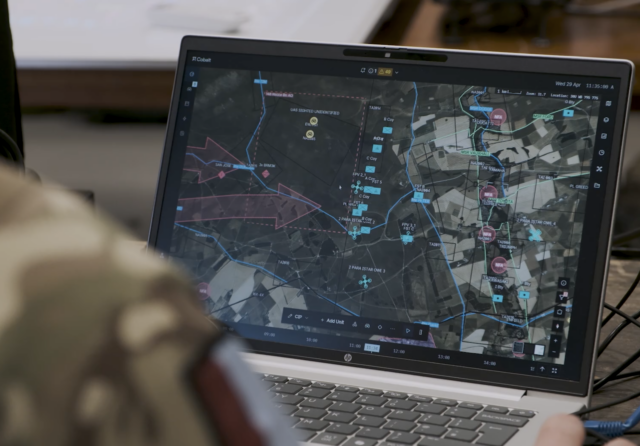
In the lab: Valkryn’s solution is what the company calls a Battle Lab that replicates real-life combat conditions, records how systems and operators perform, and gives evaluators a clear, data-driven picture of what works, what doesn’t, and why. That’s split into three main layers:
- Environment, designed to provide an experience for systems under test that mirrors combat conditions. Think RF-denial, high system saturation (for counter-drone tech), threat-accurate adversarial systems, weather conditions, and other variables.
- Measurement, which captures the data coming from the systems (via APIs and telemetry data collection) and how they perform in the tests to “reconstruct a rich event timeline,” instead of relying on visual assessment and handwritten notes.
- Learning, which picks out patterns, how “new versions correlate with outcomes, or which tactics correlate with mission success.” That’s given to evaluators in an easy-to-access, real-time web application.
“Tests are often treated as almost a compliance step, and there’s a real gap between what systems and programs claim to have in terms of performance and reality,” Zabriskie said. “The biggest learning that we’ve had in building the company is that that’s not a reflection of malintent from either industry or government. Very genuinely, it’s a gap in our data points and in our ability to learn about these systems, so we realized that’s actually a neutral technology problem.”
Off to the races: At less than a year old, Valkryn is already seeing real traction for its Battle Lab platform.
The company has secured several contracts, mostly OTAs, but they’re “all funded contracts, and they’re all operational,” Zabriskie said. “These aren’t SBIRs—this is quite real work.”
- The company has also been deployed to the Middle East—within three weeks of first demonstrating the technology, no less—to help evaluate counter-drone systems in the field.
“This is a warfighting function, and just like software, you need to test these things continuously in the physical world, and we just haven’t developed the mechanisms to do that yet,” Zabriskie said. “That risks missing failure, and that risks warfighter lives, so we think it’s one of the most important problems to work on, and the impact will be very, very real if we can [scale our] infrastructure across the Department.”