Remember when Y-Combinator graduates were building food delivery startups and e-commerce sites? Yeah, those days are well and truly gone.
This morning, integration startup Surtr—part of YC’s Spring ’26 cohort—announced in an exclusive release to Tectonic that it’s raised a $4.8M pre-seed round to build software that brings all the different sensors, command tools, and effectors necessary for c-UAS into a single interface.
- The round was led by Allegis Capital, Eniac Ventures, Gaingels, Robinhood Ventures, Streamlined Ventures, and “various angels.”
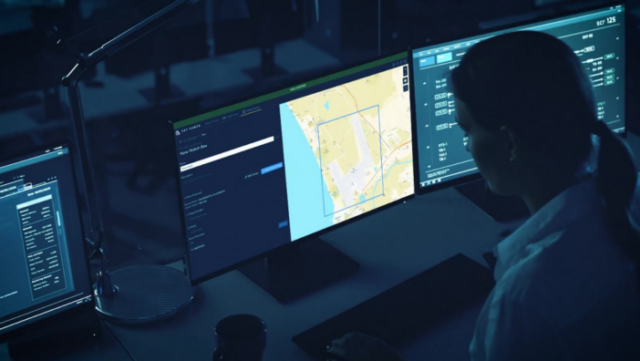
Basically, Anshul Ahluwalia told Tectonic, the idea is that operators trying to take down drones only have to look at one screen, rather than, like, fourteen.
“The problem that we’re solving is that in the last couple of years, there’s been a huge stockpile of both sensors and effectors dedicated to detecting and feeding drones, but there’s no good way to integrate all of those into one platform,” he said. “Operators right now are stuck staring at a wall of screens…this increases operator overload and mental burden. What we’re trying to do is integrate all that into a single pane of glass.”
The company plans to use the money to build out its team, submit for Pentagon programs, and get its ITAR license sorted to export to countries including Ukraine.
In the weeds: Now, as anyone who’s worked in c-UAS will tell you, there is, like, a whole lot going on at any given time.
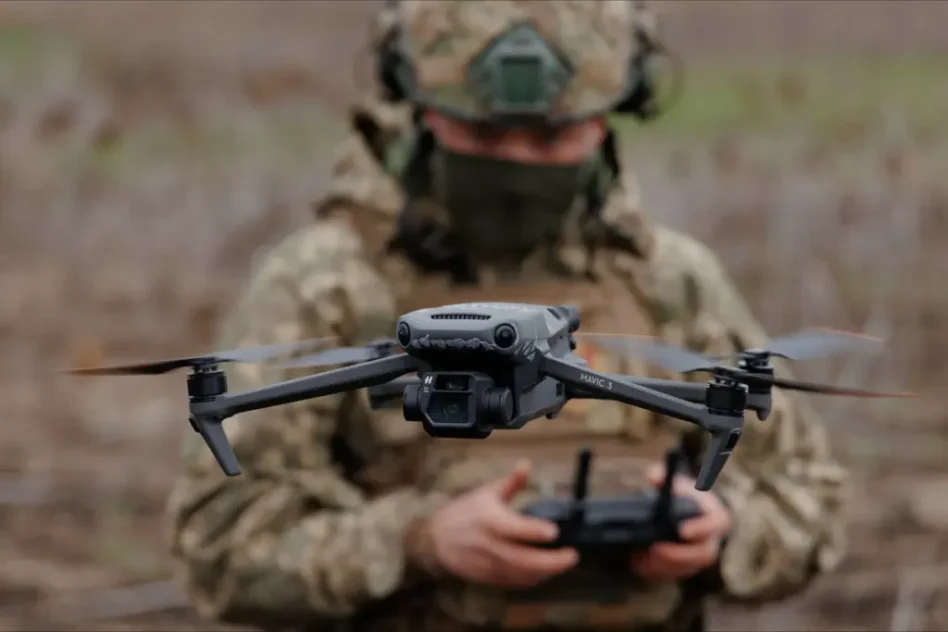
- Taking down a drone actually means getting a whole load of sometimes uncooperative hardware to work together—sensors, radars, and cameras all keep an eye out for threats, and everything from turrets to interceptors to EW systems then need to be told to take them down.
- Companies like Picogrid have made a small fortune making sure all of these systems speak to each other—Surtr’s pitch is that they add an extra software layer that brings all of the different feeds and data sets coming from that kit into one easy-to-use interface.
- Plus, they say they are adding an autonomy layer on top—basically, the idea is that the system could automatically cue a machine gun turret, for example, to take down an incoming aerial threat automatically.
Good on paper: And Surtr’s founders aren’t just wide-eyed kids jumping on the defense tech bandwagon—Ahluwalia worked as a Shield AI integration and autonomy engineer before joining YC, and co-founder Cameron Fiore was at Shield AI and Anduril in similar roles.
- They realized, working for these giants, that integrating third-party hardware into something like Lattice was a lot trickier than working with Anduril-made platforms. Per Ahluwalia, they would build one-time integrations that “didn’t really scale…These software stacks, like Lattice and Hivemind, were very tailored towards custom hardware built by those companies themselves,” he said.
- Both founders thought that companies needed an integration and data fusion software layer they could trust—something that could make plugging into a system like Lattice easier, but without giving up all your state secrets.
Out of the box: The company was officially founded in March of this year, when Ahluwalia and Fiore joined the YC Spring cohort.
- The product they ended up with is basically an edge compute unit with their software loaded onto it. This can then be plopped in the field and used by c-UAS operators.
- When plugged in, Ahluwalia says Surtr’s software brings everything onto one screen, and (eventually) operators will have the ability to automatically trigger a response. It also has an open systems architecture and is modular—meaning the whole thing (or just parts of it) can be plugged into your C2 of choice.
To the front: And despite being new kids on the block, they’ve already tested out Surtr’s software with military operators—Ahluwalia said they were contacted shortly after being “searchable on the internet” by Brave1, Ukraine’s defense tech and innovation organization.
Reps from the organization said sensor fusion was one of their biggest issues, so they invited the team out to Ukraine to test their little box out.
- The team went to Kyiv at the end of May, where in tests with the military they were “able to detect and track FPV drones [that] operators were flying at [them],” per Ahluwalia. Plus, the software was able to do so with latency of less than 100 milliseconds—critical if you don’t want your weapons systems to miss.
- So far, they’ve tested on mic arrays and cameras—which was key to showing that they could fuse acoustic and visual data.
- Next up, they want to integrate radars and passive sensors, as well as weapons systems—turrets, in particular.
Scale up: A lot of this new money will go towards further integration and delivery.
- The company is working on its ITAR license right now so it can actually cue kinetic responses on the battlefield in Ukraine.
- They’re also going to do a big hiring push—engineers (especially the forward-deployed flavor), as well as go-to-market and government relations-type people in DC.
- Ahluwalia also said they’re looking to buy hardware to test on and partner with hardware companies for further integration and testing. (They’re already working with a few companies, he said, but couldn’t say who). The more systems they work with, the better Surtr’s product will get, he said.
- They’re also working with “all of the services” on contracting and demos, and they’ve been approved for testing with the Point Defense Battle Lab (PDBL) in North Dakota.
“Interoperability is probably one of the biggest problems in defense tech today, especially since government procurement has become more friendly towards startups in the last five to 10 years,” Ahluwalia said. “Now, startups are selling directly to the government, and with this explosion of hardware, there needs to be a good way to integrate it.”