If you’ve been paying attention to the news, like, at all, it should come as zero surprise that energy infrastructure has become target numero uno in conflicts the whole world over.
At least one oil and gas company operating in the Persian Gulf is taking matters into its own hands, inking a $22.3M contract with Florida-based drone company Powerus to deploy “networked counter-UAS detection, tracking, classification and early-warning capabilities” to protect its infrastructure in the region, with the ultimate goal of integrating that with Powerus’ interceptors.
- Powerus couldn’t disclose who the customer is or where they’ll be deploying this technology, which is, ya know, probably a good call given the present state of that part of the world.
Eye on the sky: Under the deal, Powerus—backed by the president’s eldest sons, Eric and Don Jr. (sorry, Barron, no drones before you turn 21)—is providing the energy company with a system that features “a unified operational picture through command and control capabilities located at the customer’s operations center” that allows operators to detect and track aerial threats.
Under the contract, Powerus is tasked with supplying the hardware, software, site activation, and installation of the third-party system, in addition to “managing the people who will be manning the detection system,” Powerus said.
The company told Tectonic that the system is developed by California-based Digital Force Technologies, a 25-year-old advanced company with a range of sensing hardware and software, including:
- Ruggedized edge processing systems;
- Tower systems, including a lightweight sensor suite, an expeditionary variant, and larger fixed-site sensors for base defense;
- And an AI-enabled software platform called SeraphimOS that synthesizes data from its edge processing and sensor hardware.
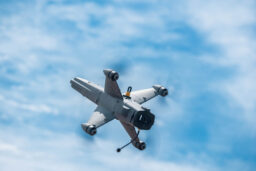
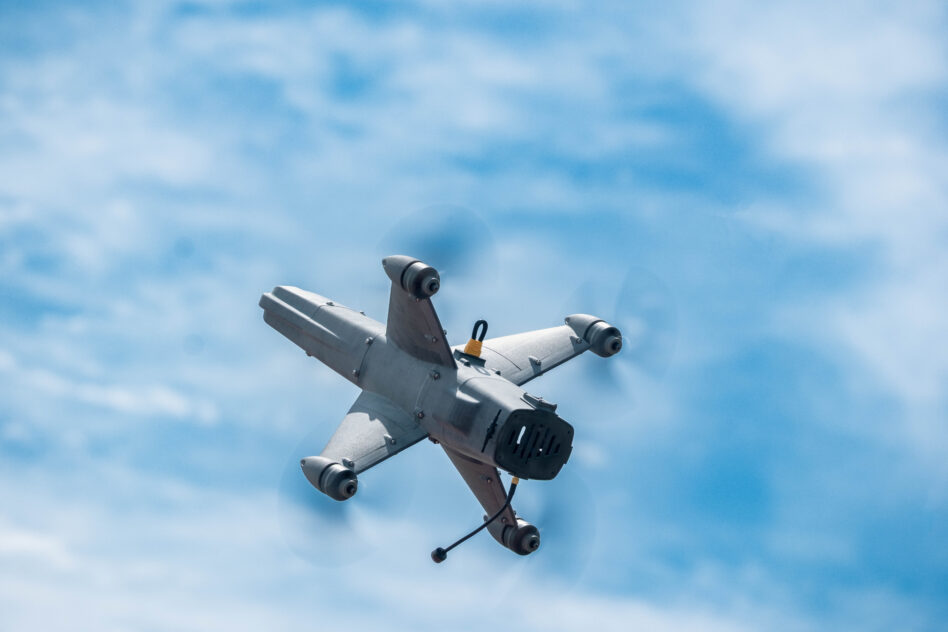
Shoot ‘em down: Ultimately, the contract is designed to expand to include Powerus’ own Guardian interceptor with DFT’s sensing architecture, which will be “operated by Powerus field reps with combat experience,” the company told Tectonic.
- Powerus’ first cUAS offering, the Guardian-1, is a compact, six-pound battery-powered interceptor drone with a cruise speed of 100mph, a top burst speed of 211mph, 10 miles of range, and a max altitude of over 16,000 feet.
- It uses radar-assisted target designation and camera-guided final approach, and scored “hundreds” of confirmed interceptions, according to the company.
- Powerus also has a second generation of the Guardian, which comes in the same form factor but with semi-autonomous navigation and engagement. That’s the one that they’re planning on integrating under this contract.
Now, this isn’t Powerus’ first rodeo in the Middle East. Earlier this year, the company was tapped by the US Air Force to deploy its Guardian interceptors “at scale,” co-founder and president Brett Velicovich told Tectonic at the time, to end customers within the “US Air Force Special Operations community” operating in the region.
This commercial contract, however, is different—and it might signal the start of a broader trend of energy companies seeking out their own defensive capabilities.
“This is a pioneering event that brings together two worlds, oil and gas and defense, in a way that reflects the future of both industries,” Velicovich said.