Well, guys. It looks a heck of a lot like the VCs are starting to come into Ukraine in full force.
This morning, tactical communications company HIMERA announced in an exclusive release to Tectonic that it’s scored a $5M strategic investment round led by Gardar to “accelerate product development and scale communications solutions for Ukraine’s Defense Forces.”
- Existing investors Varangians, Bulava, and Green Flag VC, along with new investors Superangel and Next Front Ventures, also joined the round.
“I think there is a new leap that’s happening right now in the Ukrainian military, and we saw it coming and decided that it’s a good time for us to have a bit more cash on hand to be able to tackle those opportunities and serve Ukrainian defense forces better,” HIMERA Co-Founder and CEO Misha Rudominski told Tectonic.
“We have the opportunities. We know that they’re going to generate us growth. We know that there are specific problems that we’re being directly asked to solve, and we know we can solve them,” he added. “This is just the money to do that.”
Worth noting—this is the second investment that Gardar has led into a Ukrainian firm this week. Yesterday, drone sensing and detection startup Pai Defense also announced a $5M round led by the Norwegian fund.
Stay connected: Now, HIMERA—like most Ukrainian defense tech companies—was founded out of necessity.
- The company was set up in 2022 (for fairly obvious reasons) by a team led by Rudominski and Oleksiy (Alex) Oliinyk.
- From the start of the war, they observed a pretty glaring gap in the tactical comms market: Commercially available radios were cheap and plentiful but vulnerable to Russian electronic warfare, while high-end military radios were prohibitively expensive to field en masse.
- That led to the birth of HIMERA—the team set out to build a relatively inexpensive, EW-resistant tactical comms system that could be produced and deployed at scale. Light work.
Link up: Over the past five years, they’ve come up with a few different products to, basically, make comms on the battlefield safer, easier, and more reliable:
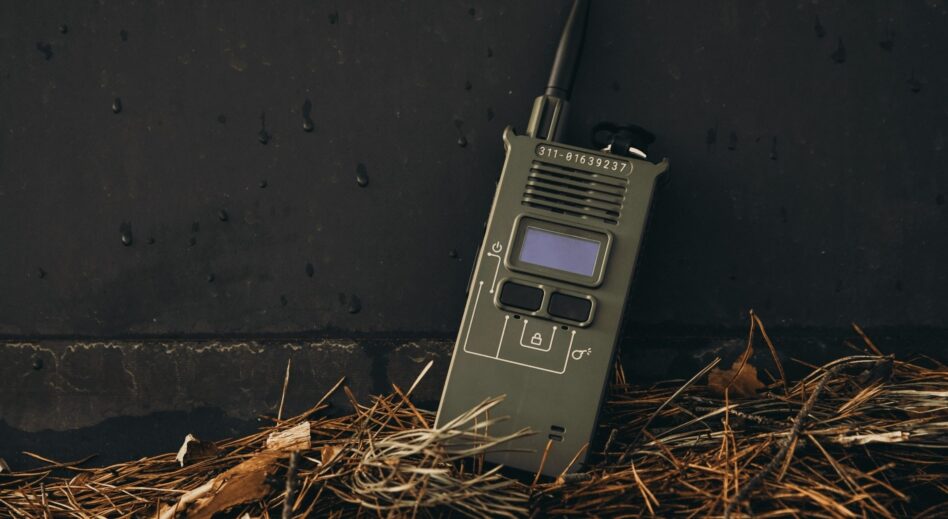
- G1 PRO handheld radio: The company’s flagship EW-resistant tactical radio, which supports secure voice and data transmission. The first version was called G1—the Pro is even more hardened against jamming.
- B1 autonomous repeater: A standalone repeater designed to extend the coverage of HIMERA’s communications network.
- R1 IP-repeater: A repeater that enables communications between geographically separated HIMERA networks via the internet.
Earlier this month, they also launched a satellite with Denmark’s GomSpace that they hope will be the cornerstone of an independent Ukrainian satellite comms network.
Doing numbers: To date, Rudominski said that HIMERA has “more than 10,000 users in Ukrainian Defense Forces” using their radios and devices, including “a number of brigades in the Ukrainian Defense Forces that are fully using [their] communication equipment as their primary means of communication.”
- They’ve also got “Army corps that are transitioning right now into using [the] system.”
- The direct-to-government route is one of their revenue streams. They also work with hardware producers—HIMERA has partnered with companies like Tencore (mega-huge Ukrainian UGV producer) to build their networking and comms devices onto their systems.
Meet the moment: Rudominski says he only sees demand for the products the company is building increasing—this funding helps them to meet that.
“What I see in Ukraine right now is that…there is much more new demand coming from customers outside of the traditional kind of drones, UAVs, UGVs, USVs, electronic warfare, interceptor type of solutions,” he said. “[The military] is more into digitalization [and] automation of everything that’s happening on the battlefield, which can only be supported with the right networking equipment and communication equipment.”
Plus, given certain satellite networks’ recent tendency to, well, not work (cough, looking at you, Elon, cough), he says there is a big push from the government to develop sovereign, hardened comms systems.
“There is a demand signal from the General Staff…to transition Ukrainian Armed Forces into using Ukrainian-made communication equipment,” he said. “It’s generally a good thing to have options…that’s something that’s been very clear and made even more apparent in recent months.”
Diplomatic.
Come in, come in: If you’re sitting there thinking, “Wait, I want a radio too, but I am not in Ukraine,” fret not. A portion of this funding is going to go towards international expansion.
- The company has had a presence in the US since 2024 and Europe since 2025.
- They’ve also got partnerships and MoU’s with the Estonian subsidiary of Swarmer, Finland’s Bittium, Estonia’s Wayren, Canada’s Quantropi, and the US’s Reticulate Micro—plus GomSpace.
- A big target market right now, Rudominski said, is the Nordics and the Baltics—ya know, those places that are particularly acutely aware of the threat from Russia.
But the company’s main focus—as long as the war continues—is on making the best possible systems for Ukrainian operators, he said.
“We are here in Ukraine,” he said. “We understand the problem of the customer better. We can be flexible. We know how to train. We know how to integrate our solutions into the Ukrainian Defense Force, and that adds huge additional value.”