So much for the days when Quantum Systems was staunchly non-kinetic.
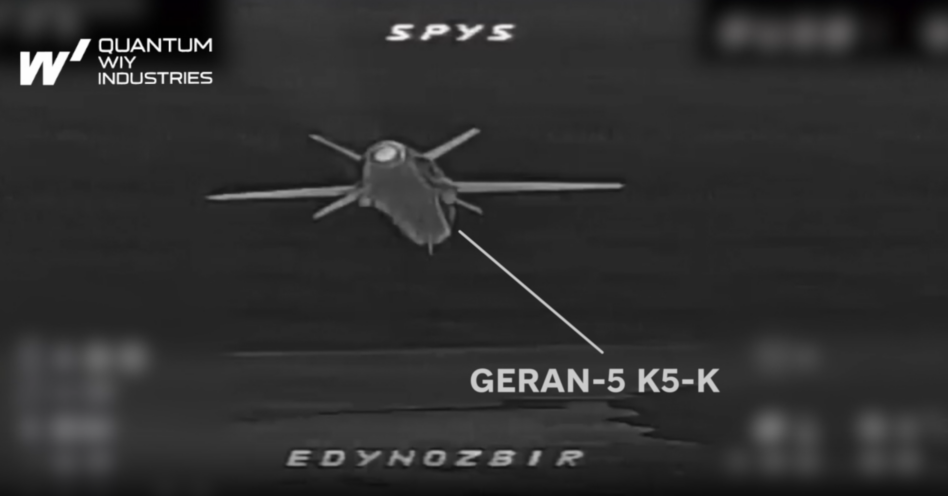
Yesterday, the German drone giant (as part of its JV with Ukrainian WIY drones) announced that it has officially intercepted a Geran-5 K5-K (the really, really fast ones) during combat testing on the ground in Ukraine.
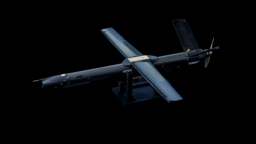
- The intercept was pulled off by Quantum WIY Industries’ SPYS interceptor, designed to “help protect cities and critical infrastructure from fast, jet-powered attack drones.”
- And this isn’t Quantum’s only go-fast move lately—just about a month ago, the company said it recorded speeds of over 777 km/hr with its Apex Recordhunter demo interceptor.
“We need to keep developing and scaling interceptors to protect Ukrainian cities and critical infrastructure,” Quantum co-CEO Sven Kruck said in a statement. “Russia keeps adapting its attack systems, so we work closely with Ukrainian brigades to adjust our systems accordingly.”
Pew-pew, indeed.
Up in the air: Now, Quantum Systems might not be the first company you think of when you think of interceptors, but my, oh my, have they been making some serious moves in the whole taking down drone things lately.
For the uninitiated, a bit of context:
- QS was founded back in 2015 by a team led by (other) co-CEO Florian Seibel. Initially, they set out to build drones that could “redefine how aerial data is collected, analysed, and turned into action.” ISR, for those who like things straight and to the point.
- Their initial drone lineup was pretty dang dual-use and very much all ISR—starting with the commercially oriented Tron and Trinity before expanding into military-specific platforms with the Vector and Scorpion.
- In 2025, they also unveiled Twister (smaller, tactical ISR) and Reliant (bigger, longer-range ISR). Then, this year, they moved into larger aerial platforms with the Pulse P19.
- They’ve also jumped into ground autonomy (with the acquisition of Fernride and the launch of its ground robotics division this year) and maritime (with Seavex, a long-endurance USV, and Subvex, an AUV).
And they’ve raised a (technical term) shit ton of money to do all this—this summer, they raised a $1.2B (yes, with a B) at an $8B valuation, bringing total funding to $1.94B (per PitchBook).
High-flying friends: A lot of Quantum’s moves into the whole kinetics, pew-pew, interceptor side of things have come through the company’s partnerships with Ukrainian firms.
- In July 2025, Quantum inked a deal to acquire a 10 percent stake in Frontline Robotics, and the two formed a JV in Germany last December to produce Ukrainian reconnaissance and strike drones.
- Then, in April of this year, they set up another JV with Ukrainian interceptor manufacturer WIY Drones—dubbed Quantum WIY Industries. That’s who’s making SPYS.
- And it’s not just about smaller autonomous systems—in October, QS also signed an MoU with deep-strike giant Fire Point to jointly develop unmanned systems and air defense.
Speedrun: This successful Geran-5 takedown comes as everyone and their mom is trying to find a better way to intercept jet-powered drones.
- And not without reason—in case you haven’t been keeping up with Tectonic (for shame), Russia has been using mega-fast Geran-5s in its air assault against Ukraine since the beginning of the summer.
- Before those bad boys rolled out, Ukraine had gotten pretty good at shooting down earlier versions (3s and 4s) which could fly at about 180-200 km/hr.
- But the newest, jet-powered models (especially the 5s) can travel up to 600 km/hr—and most experts only expect them to get faster. That means you need much, much faster interceptors to take them down.
- And, annoyingly, it isn’t just a speed problem (well, not just a speed problem)—when adversarial UAVs are traveling that fast, it’s very hard to hit them tail-on, even harder to hit them on the nose, and thus requires some pretty creative side-on interception and detonation. (You can read all about this in our dispatch from Kyiv here.)
Do the work: A few companies (mostly Ukrainian, including SkyFall, Wild Hornets, and Vyriy) say they’ve taken down Geran-4s and 5s with their jet-powered interceptors to date, but roughly 30-40 percent were still getting through as of last month. (That’s compared to just 5-10 percent for the earlier Geran variants).
- QS did not say in its release when the drones would be fielded at scale, but said that its JV with WIY “manufactures in Ukraine and has increased its production capacity from hundreds to thousands of units per month in 2026.”