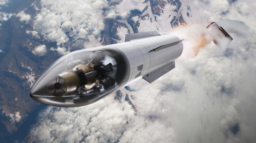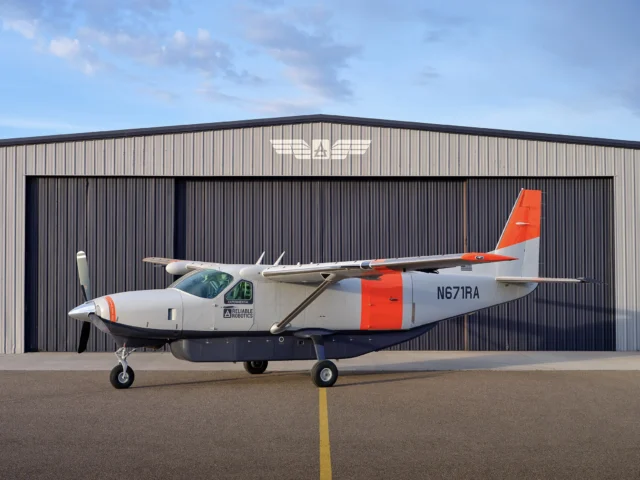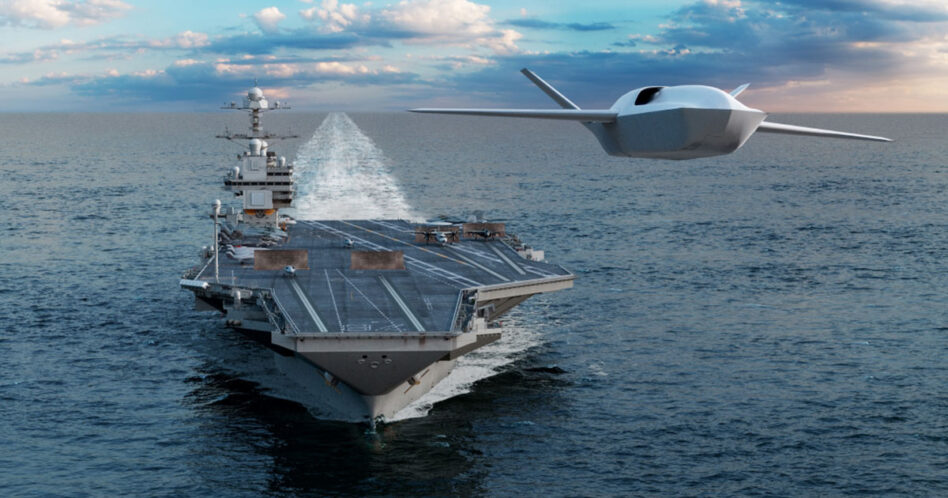
It’s official, y’all: The Navy has issued its RFI for prototypes for its very own Collaborative Combat Aircraft (CCA) program.
On Monday, the service released its official request from industry for two prototypes of “an affordable, highly capable, risk-tolerant, carrier-capable, weaponized, extended-range, autonomous unmanned air vehicle that can seamlessly deploy from and recover to Gerald R. Ford-class and Nimitz-class nuclear aircraft carriers.”
The Navy says it wants prototypes that cost less than $30M, are no bigger than a 4th-gen fighter aircraft, can operate “directly from the sea,” and are ready to rock ‘n’ roll within three years of award issuance.
Say it with us: Everyone really does love a tiny little plane.
Drone dominance: Now, to back things up: Rumors of a Navy CCA program that would look a lot like the Air Force’s first started up last fall.
- In September 2025, it emerged that the Navy had quietly tapped Anduril, General Atomics, Boeing, and Northrop Grumman to build concept designs for a carrier-capable loyal-wingman program. Lockheed was tapped to build the command and control (C2) brains for the whole thing.
- All four companies confirmed their concept prototypes, but at the time publicly listed requirements for the program were pretty vague: All we knew was that the design needs to be carrier-based, uncrewed, modular, and able to work alongside crewed fighters.
- Worth noting—while Shield AI’s X-BAT (mega-VTOL CCA) was not among those initial concept contracts, the Navy (and DIU) did invest a whole $50M in development of the aircraft last month.
Brass tacks: Now we know, like, a whole heck of a lot more about what the Navy wants—and when they want it by.
- Most notable here is the timeline the service is operating on—we ain’t doing no two-decade development program here (RIP to the MQ-25). They want a mission-capable MVP within six months of a contract being signed, with updates every six months and an initial platform-in-a-box by Month 12. First flight is slated for 24 months into the program, with full shore-based carrier certification by the end of Year Three. Speedy.
- As we could have probably guessed, they need to be carrier-capable: Able to do catapult launch and arrested landing, take up minimal space on a ship, integrate with existing carrier systems, and land through Sea State 5.
- And they need to be fast: At minimum, the drones have to operate at standard carrier-air-wing cruise speeds, at long enough range, to carry out pretty dang expeditionary missions.
- The Navy also wants, like, a lot of go-boom: Each CCA prototype should be able to carry four weapons of up to 2,500 lb each.
- They also want it pretty cheap (or cheap for, like, fighter aircraft): Each CCA should cost no more than $30M, and producers will need to show how they can scale manufacturing at that price. They’re also looking for drones that are “risk-tolerant” (i.e., not so expensive that losing one will be a budgetary and political disaster) but able to demo survivability.
Big brain: Then there’s the whole autonomy part of it all.
- The Navy isn’t just looking for “can you get this in the air.” The service is looking for prototypes that have both safety-critical flight autonomy and adaptable mission autonomy, including collaborative behavior from launch through recovery. They also want the CCAs to be compatible with third-party software (always a good idea to keep Lockheed happy).
- Anything companies come up with should also be able to fly single-ship and multi-ship strike missions in highly contested environments, including from expeditionary locations, and ultimately needs to be able to plug into the Navy’s C2 (MD-5 Unmanned Carrier Aviation Mission Control System).
- And finally, there’s the connectivity piece—all prototypes should be equipped with the radios and sensors necessary to link them to carrier and onshore systems (including for targeting). Need to be able to drop those heavy-ass bombs in the right places, after all.
Fork it over: Buried at the bottom of the RFI is an interesting detail—the Navy says it’s likely to issue OTAs for these CCAs and expects to develop the aircraft “through a resource-sharing arrangement where the Performer [CCA developer] provides a significant financial investment alongside government in-kind contributions.” No cost-plus here, baby.
Rip those VC checkbooks open and let the games begin.