Kraken is stepping things up in the Commonwealth.
Yesterday, the UK-based unmanned surface vessel (USV) startup announced a partnership with Canadian shipbuilding giant Davie to manufacture its USVs in Québec, starting with its flagship K3 Scout speedboat-drone.
Zoom zoom (said in a Québecois accent).
Small and speedy: Kraken, if you’ve been paying attention to the maritime autonomy space (and are a regular Tectonic reader), has made a big splash since pivoting from making racing speed boats to defense in the past few years.
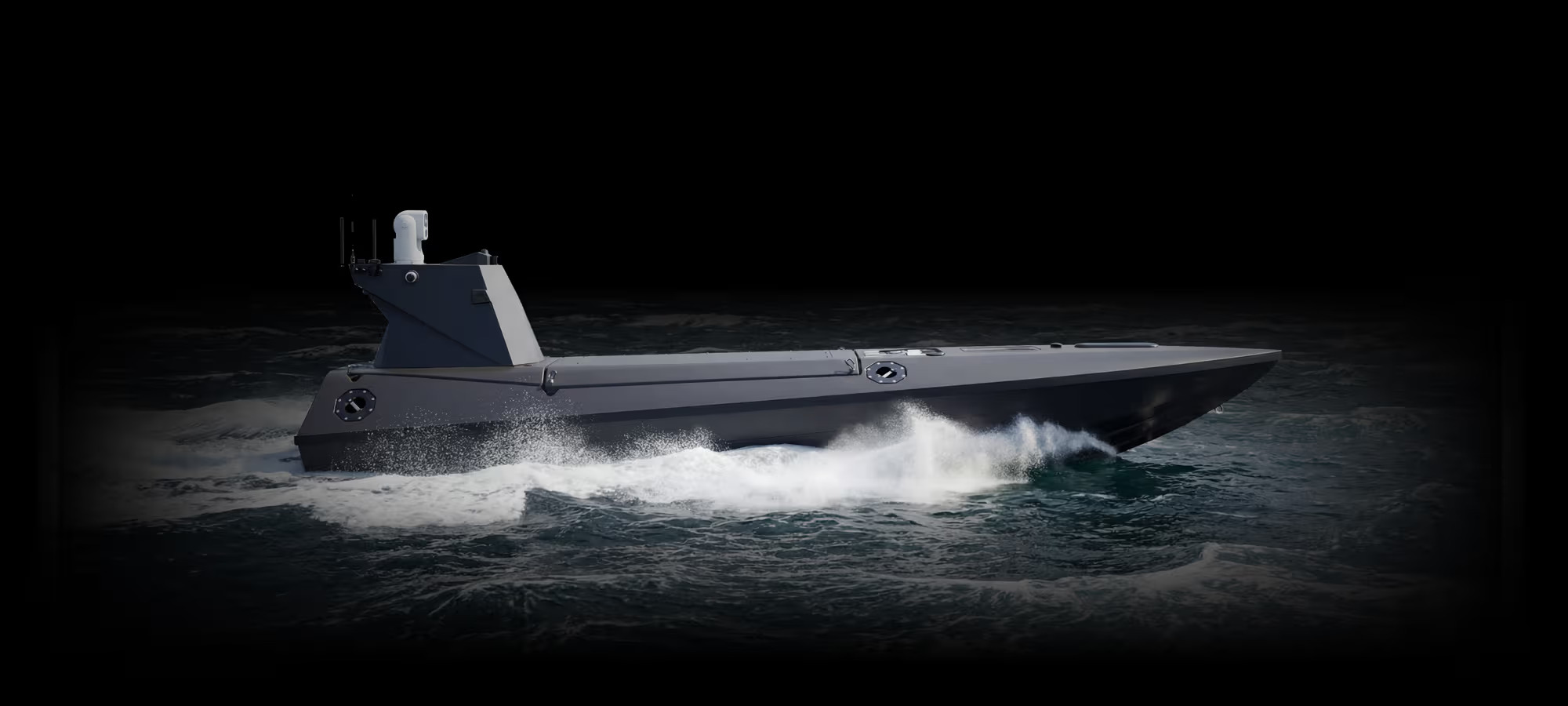
They have a few USVs on offer, but their most popular (and the focus of the partnership with Davie) is the K3 Scout.
- It’s a speedboat-like USV that comes in three sizes—Medium (8m long, 600kg payload, and top speed of 55 knots), Heavy (12m long, 2,000kg payload), and Max (18.6m long, 10,000kg payload, and a range of 2,000 nautical miles). It comes in at around £250,000 ($338,100) per unit.
- They also have the K4 Manta, a stealthy uncrewed surface-subsurface vehicle (USSV), and the K5 Kraken, a 40-foot vessel with heavy weaponization payloads that Kraken CEO Mal Crease told Tectonic was an “evolution” of the Scout Heavy.
Ramping up: The company is pumping them out in impressive numbers with some help from some of the biggest names in the shipbuilding biz, including German shipbuilder NVL and defense giant Rheinmetall. Now, they’ve added Davie to that list.
- Kraken told Tectonic that they’re now “building one boat every day in the UK,” with plans to ramp up to 1,000 annually.
- Through their partnership with Rheinmetall, they’re “currently manufacturing” 200 USVs at the Blohm + Voss shipyard in Germany, with “plans to scale to 1,000 per year.”
- They also recently teamed up with Anduril to expand USV production in the US, focused on the K5 Kraken and a new, bigger vessel called the K7 Sabre.
And that shipbuilding spree ain’t for nothing: The company snagged a £12.3M contract with the UK’s Royal Navy for the Scout earlier this year through Project Beehive, and a $49M cap OTA for the super-speedy USVs with USSOCOM back in November.
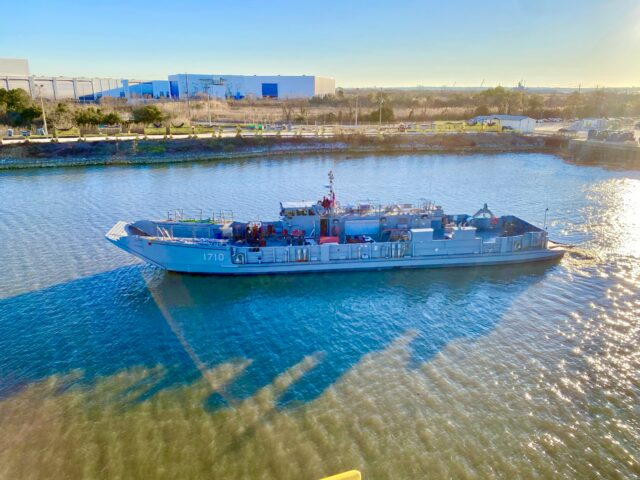
Old Man and the Sea: Davie, for the record, is very much in the shipbuilding old guard.
The Canadian giant—founded way back in 1825—cut its teeth building big ships.
- The company holds half of Canada’s entire shipbuilding capacity, with over 6M square feet of total shipyard area and over 700 ships delivered to date.
- A big chunk of those ships are (given Canada’s Arctic environment) of the icebreaker variety. They’re currently under contract with the US and Canadian coast guards for those big ol’ bad boys.
- In 2012, the company was bought by Inocea (a maritime industrial group spanning Canada, Finland, and the US), which has invested over $1B into Davie’s Québec shipyard.
Build up: That capacity gives Kraken a whole lot of space to expand its footprint in North America (classic Brits). “Davie is Canada’s largest and most capable shipbuilder and has the capability to manufacture our vessels at scale and at mass,” the company told Tectonic.
For Davie, that gets them—and their biggest customer, the Canadian government—into the small-and-speedy side of modern maritime warfare with a white-hot, globetrotting startup.
“Navies around the world, including the Royal Canadian Navy, are adopting integrated crewed and uncrewed systems,” Kraken said. “As Canada re-arms, Kraken’s vessels offer a domestically produced capability to persistently monitor and protect Canada’s interests, including its critical national infrastructure, and support its transition to a mixed fleet.”
Ice water: If you’re wondering how Kraken’s vessels will fare in the icy waters of Canada, worry not.
The company said they’ve designed the USVs to “manage high sea states…in demanding conditions,” including by outfitting them “with an extended climate kit to mitigate ice accumulation and maintain functionality in extreme conditions” with a de-icing integration on the deck.
This is all good news for Canada, which, until recently, has lagged behind its allies in the pivot to autonomous systems, especially on the maritime front.
A 2024 report from a Canadian defense think tank found that, “In terms of [Maritime Autonomous Systems], the Royal Canadian Navy has accomplished the least out of [Five Eyes] navies to integrate autonomous systems into their fleet,” and should “quickly and effectively facilitate the acquisition of MAS.”
Some startup spice from across the pond should help our northern neighbors get their robo-sea legs.