The US has a nuclear waste problem. A startup has an idea on how to fix it—and give all the power-hungry drones, sensors, and other hardware the Pentagon loves a next-gen, long-duration energy supply. Investors are going all-in on it.
This morning, Project Omega announced that it’s raised an $80M Series A led by B Capital to speed up development of its nuclear fuel recycling technology and start fielding its expeditionary power systems for everything from satellites and microreactors to unmanned undersea vehicles (UUVs) and edge compute.
- 645 Capital, noa VC, Starship Ventures, Mantis Ventures, Decisive Point, Washington Harbour Partners, and others participated in the round.
- Project Omega emerged from stealth in February with $12M in seed funding.
Trash to treasure: Put simply, the US has a whole lot of spent nuclear fuel lying around. Nearly 100,000 tons of nuclear waste from commercial nuclear power plants, accumulated over decades of operation, are stored at more than 100 sites across the country. That spent fuel, the government’s trash, contains more than 90 percent of its inherent energy. Project Omega wants to turn it into treasure.
The solution the Rhode Island-based startup is developing has two main elements:
- The isotope source, which emits the radiation. Project Omega uses safer alpha and beta radiation instead of the more hazardous gamma radiation (the one that turned Bruce Banner into the Hulk).
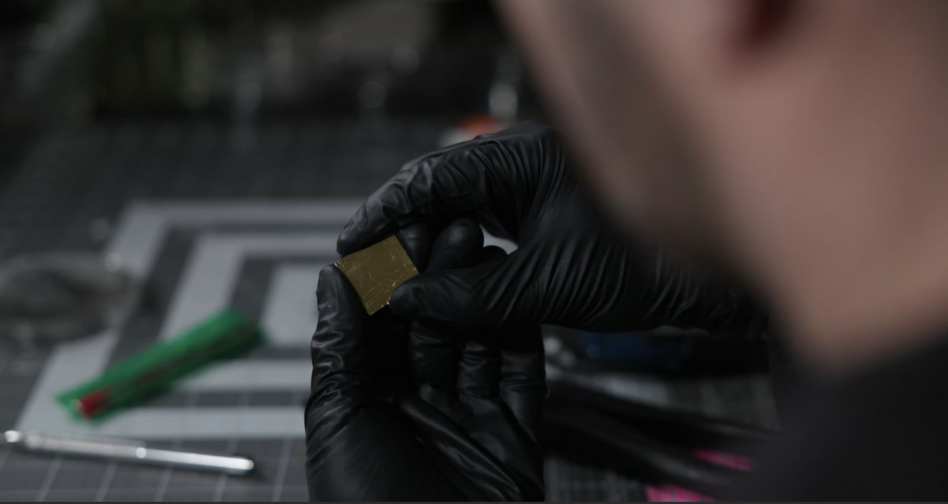
- The semiconductor, which absorbs the radiation and stores it as a power source for use in space systems, remote sensing, autonomous vehicles, undersea infrastructure, and other defense applications. Basically, it converts the natural decay of those radioisotopes directly into electricity.
That process, which uses molten salts instead of the standard aqueous recycling method, recovers more isotopes more safely and reduces nuclear waste volume by up to 90 percent, according to the company. It also allows that energy to be containerized, stored, and used as a portable, long-duration energy supply for systems in the sea to space.
- To start, Project Omega is launching its family of modular, intelligent expeditionary power systems, called X Series, that integrates battery storage with energy from different power sources, including wind, solar, and nuclear.
- That can be scaled down to individual man-portable (briefcase-sized) batteries and all the way up to a microgrid power system and is meant to replace things like diesel generators and standard batteries.
- “Our power router enables us to utilize all of these energy sources in a way that is usable for the demand of the warfighter, which is not always predictable,” Project Omega co-founder and CEO Staff Sheehan told Tectonic.
“In those environments where you don’t have any other sort of power available or your power might not be fully reliable, [warfighters] being able to utilize a battery that lasts 30 years in those environments is our primary focus,” Sheehan said. “Making sure that warfighters have power at the [Forward Operating Bases], on the frontlines, and then UUV and space in that order.”
Power play: That’s already caught the attention of the US military and customers looking to get their hands on the startup’s nuclear batteries.
- Project Omega is working with the Idaho National Laboratory, the Pacific Northwest National Laboratory, and DARPA through a $3.37M contract to accelerate its next-generation radioisotope power systems under the Rads to Watts program.
- The startup is “doing some testing later this month” in Hawaii with PACOM, Sheehan said, which are going to be their “first field tests.”
- They’re also working with microreactor companies on defense applications (think Project Janus).
With $80M in fresh funding, the goal is to “take this from the prototypes we have now and go to fully operational,” he added. “While we are building the recycling facility, we’re going to be commercializing and selling our X Series and radioisotope power systems. This moves us from prototype systems to commercial sales.”